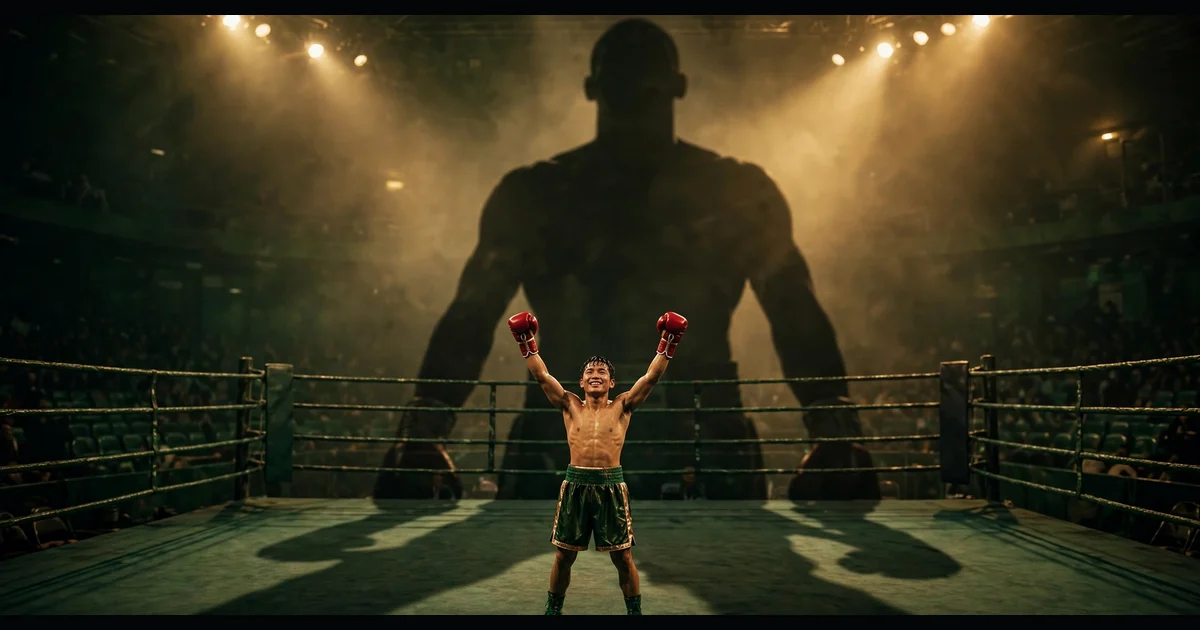
The best synonyms of underdog include long shot, dark horse, outsider, also-ran, bottom dog, little guy, minnow, and challenger. An underdog (US IPA: /ˈʌndərˌdɔɡ/) is the person or team everyone expects to lose. The best word depends on the contest. In sport, a weak team is a minnow or a rank outsider. In an election, it is a fringe candidate or a paper candidate. In stories, the hero is a David facing a giant, or simply the little guy. These 30 words will help you talk about sport, elections, films, and everyday struggles.
10 Underdog Synonyms at a Glance
| No. | Synonym | Simple Meaning |
| 1 | Long Shot | Competitor with very little chance |
| 2 | Dark Horse | Unknown competitor who may surprise |
| 3 | Outsider | Competitor with little chance of winning |
| 4 | Also-Ran | Competitor who never really threatens |
| 5 | Bottom Dog | Person in the weakest position |
| 6 | Little Guy | Ordinary person against the powerful |
| 7 | Minnow | Small team among much bigger teams |
| 8 | Challenger | Person facing the champion |
| 9 | David | Small hero facing a giant |
| 10 | Giant Killer | Underdog who beats the champion |
These words all describe someone expected to lose, but they differ in strength. Some, like no-hoper, say the chance is almost zero. Others, like dark horse, leave the door open for a surprise. Each word below comes with a simple meaning, pronunciation, and two easy examples.
Meaning of Underdog
Definition
Underdog (noun): A competitor or team thought unlikely to win a contest or struggle; also, somebody who starts at a disadvantage against stronger opponents.
The side expected to win is called the favourite or the top dog, and when the underdog wins instead, the result is called an upset.
Examples
- The little club was the underdog, but it beat the champions 2–1.
- Voters often warm to the underdog in an election campaign.
Grammar and Usage
Underdog is a countable noun: an underdog, two underdogs — “The underdogs won three games in a row.”
People root for the underdog — they support the weaker side. The word also works as a describing word before a noun: an underdog team, an underdog story, the underdog spirit. Politicians often cast themselves as the underdog to win sympathy.
Connotative Meaning
(Connotation means the feelings, ideas, or emotions that a word suggests beyond its basic meaning.)
- Positive tone: Brave, hopeful, and easy to love — the fighter nobody counted on.
- Negative tone: In betting, simply the side with the longest odds.
- Neutral tone: In sports news, a plain label for the team that is not expected to win.
Because the word carries so much sympathy, it is rarely an insult today.
Etymology
The word underdog is a young compound with a rough beginning in the world of animal fighting.
- Source language: English, built from under + dog.
- Original meaning: “The beaten dog in a fight” — recorded in 1887. In a dog fight, the losing dog ended up underneath its opponent; the winner’s name survives as top dog.
- From dogs to people: Within a few years, writers were using the word for any person or team at a disadvantage.
A popular story links the word to sawmills, where a junior worker stood in a pit under the log — but etymology references do not support that tale.
Pronunciation (US & UK – IPA)
US: /ˈʌndərˌdɔɡ/
UK: /ˈʌndəˌdɒɡ/
The stress falls on the first syllable in both varieties.
Syllables
un · der · dog
The word has three syllables.
Main Content: 30 Synonyms of Underdog
Synonyms for Underdog in Sports
Sports uses the richest family of underdog words, from racing language to the modern tournament draw. Every underdog faces a stronger opponent, so our guide to synonyms of enemy is a natural companion.
1. Long Shot (Noun)
US IPA: /ˈlɔŋ ˌʃɑt/ | UK IPA: /ˈlɒŋ ˌʃɒt/
Meaning: A long shot is a competitor with very little chance of success, like an arrow fired at a distant target. Bookmakers give long shots the longest odds — but a small chance always remains.
Examples:
- The young runner was a long shot, yet she finished second.
- The cup is a long shot for a team this small.
2. Dark Horse (Noun)
US IPA: /ˈdɑrk ˌhɔrs/ | UK IPA: /ˈdɑːk ˌhɔːs/
Meaning: A dark horse is a competitor whose true ability is unknown, so nobody can judge its chance. The phrase comes from horse racing, where it meant a horse with an unknown record. Unlike a no-hoper, a dark horse may be secretly strong.
Examples:
- The quiet student was the dark horse of the chess final.
- Every tournament has a dark horse that surprises the favourites.
3. Outsider (Noun)
US IPA: /ˌaʊtˈsaɪdər/ | UK IPA: /ˌaʊtˈsaɪdə/
Meaning: An outsider is a competitor outside the group of serious contenders, with little chance of winning. Racing pages use it for any horse not among the favourites.
Examples:
- The outsider won the race at odds of fifty to one.
- As a complete outsider, she had nothing to lose.
4. Rank Outsider (Noun)
US IPA: /ˈræŋk ˌaʊtˈsaɪdər/ | UK IPA: /ˈræŋk ˌaʊtˈsaɪdə/
Meaning: A rank outsider is the strongest form of outsider: a competitor with almost no chance at all. The word rank here means complete or utter, so the phrase closes the door that dark horse leaves open.
Examples:
- The village team were rank outsiders against the national champions.
- A rank outsider took gold, and the crowd went wild.
5. Also-Ran (Noun)
US IPA: /ˈɔlsoʊ ˌræn/ | UK IPA: /ˈɔːlsəʊ ˌræn/
Meaning: An also-ran is a competitor who takes part but never really threatens to win, and is soon forgotten. Racing results once listed losing horses with the words “also ran,” and the phrase became a slightly unkind name for hopeless entrants.
Examples:
- After two defeats, the team became an also-ran.
- He did not want to be an also-ran, so he trained all winter.
6. Minnow (Noun)
US IPA: /ˈmɪnoʊ/ | UK IPA: /ˈmɪnəʊ/
Meaning: A minnow is a very small fish, and in sport the affectionate name for a tiny team or country drawn against giants in a tournament. Minnows are expected to lose heavily, which is why their rare wins become famous.
Examples:
- The minnows held the champions to a draw.
- Cup draws love a story of minnows against sharks.
7. Cinderella Team (Noun Phrase)
US IPA: /ˌsɪndəˈrɛlə ˌtim/ | UK IPA: /ˌsɪndəˈrelə ˌtiːm/
Meaning: A Cinderella team is a lowly team that suddenly succeeds far beyond every prediction, like the servant girl of the fairy tale who ends up at the ball. American sports writers use it every tournament season.
Examples:
- The Cinderella team reached the semi-final.
- Every March, television hunts for the next Cinderella team.
8. Low Seed (Noun Phrase)
US IPA: /ˈloʊ ˌsid/ | UK IPA: /ˈləʊ ˌsiːd/
Meaning: In a seeded tournament, the strongest players are seeded high so they meet late in the draw. A low seed starts near the bottom, is paired with a star in the first round, and is expected to go home early.
Examples:
- The low seed knocked out the champion in the very first round.
- As a low seed, they faced the top team first.
9. Cellar-Dweller (Noun)
US IPA: /ˈsɛlər ˌdwɛlər/ | UK IPA: /ˈsɛlə ˌdwɛlə/
Meaning: A cellar-dweller is a team stuck at the bottom of the league table, in the “cellar” of the standings. It describes a whole season of weakness, not just one match.
Examples:
- After nine straight losses, the club became the league’s cellar-dweller.
- The cellar-dwellers finally won a game.
10. Underrated Team (Noun Phrase)
US IPA: /ˌʌndərˈreɪtəd ˌtim/ | UK IPA: /ˌʌndəˈreɪtɪd ˌtiːm/
Meaning: An underrated team is better than its reputation: judges and opponents rate it lower than it deserves. It is one of the mildest words in this list, because the low expectation is the whole mistake.
Examples:
- They are the league’s most underrated team.
- An underrated team with a strong defence can beat anyone on its day.
Synonyms for Underdog in Contests and Elections
Elections have their own underdog language: some words describe the candidate with almost no chance, others the one facing a famous champion. Campaigns love the sympathy in the word underdog, while an overconfident favourite can be punished — see our guide to synonyms of arrogant shows the words voters use for that mistake.
11. Fringe Candidate (Noun Phrase)
US IPA: /ˈfrɪndʒ ˌkændɪdeɪt/ | UK IPA: /ˈfrɪndʒ ˌkændɪdət/
Meaning: A fringe candidate stands at the edge of an election, far from the main contest, with unusual ideas or almost no support. News reports use it for candidates who fill the debate stage but never come near winning.
Examples:
- The fringe candidate won laughs but few votes.
- Every election attracts fringe candidates with bold promises.
12. Paper Candidate (Noun Phrase)
US IPA: /ˈpeɪpɚ ˌkændɪdeɪt/ | UK IPA: /ˈpeɪpə ˌkændɪdət/
Meaning: A paper candidate is a candidate in name only: the name appears on the ballot paper, but there is no real campaign and no expectation of winning. British parties use them in seats they cannot win, just to give supporters someone to vote for.
Examples:
- She stood as a paper candidate in an unwinnable seat.
- The paper candidate did no campaigning and still won two hundred votes.
13. Challenger (Noun)
US IPA: /ˈtʃæləndʒər/ | UK IPA: /ˈtʃælɪndʒə/
Meaning: A challenger is the person who takes on the current champion or title holder. The word does not promise defeat — some challengers are strong — but the challenger starts as the outsider who must take the prize away.
Examples:
- The young challenger faced the champion.
- As the challenger, she attacked the mayor’s record daily.
14. No-Hoper (Noun)
US IPA: /ˈnoʊ ˌhoʊpər/ | UK IPA: /ˈnəʊ ˌhəʊpə/
Meaning: A no-hoper is a person or team with no hope of success at all. It is a blunt, mostly British word: where a long shot still has a chance, a no-hoper is not expected to have one.
Examples:
- Called a no-hoper, his second place shocked everyone.
- A team of no-hopers rarely stays cheerful.
15. Unlikely Winner (Noun Phrase)
US IPA: /ʌnˈlaɪkli ˌwɪnər/ | UK IPA: /ʌnˈlaɪkli ˌwɪnə/
Meaning: An unlikely winner is the competitor nobody picked, named from the moment the surprise result arrives. Used before a contest, it means the winner nobody expects — a hopeful cousin of the underdog.
Examples:
- The oldest horse in the race became its most unlikely winner.
- She was an unlikely winner, chosen over three famous singers.
16. Token Candidate (Noun Phrase)
US IPA: /ˈtoʊkən ˌkændɪdeɪt/ | UK IPA: /ˈtəʊkən ˌkændɪdət/
Meaning: A token candidate is put forward as a symbol — to represent a group or complete a list — rather than with any serious plan to win. Like the paper candidate, a token candidate is an underdog by design.
Examples:
- He stood as a token candidate for the village.
- A token candidate rarely raises money or holds meetings.
17. Wild Card (Noun)
US IPA: /ˈwaɪld ˌkɑrd/ | UK IPA: /ˈwaɪld ˌkɑːd/
Meaning: A wild card is a competitor allowed into a tournament without qualifying in the normal way, or any entrant nobody can predict. It comes from card games, where a wild card can stand for any other card.
Examples:
- The wild card reached the quarter-final.
- In the talent show, the wild card won the public vote.
Synonyms for Underdog in Stories and Everyday Life
Outside sport and politics, these words describe the small person facing the powerful: the employee against the company, the newcomer against the famous names. Many belong in our people and character synonyms collection.
18. Bottom Dog (Noun)
US IPA: /ˈbɑtəm ˌdɔɡ/ | UK IPA: /ˈbɒtəm ˌdɒɡ/
Meaning: The bottom dog is the person in the weakest position in any fight or system — the one underneath, with the least power. Dictionaries list it as a direct equivalent of underdog in the “somebody at a disadvantage” sense; its opposite is the top dog.
Examples:
- In every argument, he ended up as the bottom dog.
- The film follows a bottom dog who refuses to stay at the bottom.
19. Little Guy (Noun Phrase)
US IPA: /ˈlɪtəl ˌɡaɪ/ | UK IPA: /ˈlɪtəl ˌɡaɪ/
Meaning: The little guy is the ordinary, powerless person set against big companies, governments, or famous opponents. It is a warm, sympathetic phrase, often used by politicians promising to defend ordinary people.
Examples:
- The shopkeeper was the little guy fighting a giant chain.
- Her songs always stand up for the little guy.
20. David (Noun)
US IPA: /ˈdeɪvɪd/ | UK IPA: /ˈdeɪvɪd/
Meaning: In the phrase David and Goliath, David is the small, young hero who defeated a giant with a single stone, and his name now means any underdog facing a giant. David later became a king himself — see our guide to synonyms of king for the words of the throne he won.
Examples:
- The final was a real David and Goliath contest.
- Every David needs one perfect throw against his Goliath.
21. Nobody (Noun)
US IPA: /ˈnoʊˌbʌdi/ | UK IPA: /ˈnəʊˌbɒdi/
Meaning: As a noun, a nobody is a person of no importance or fame. In underdog stories, the nobody is the unknown singer, boxer, or student whom the famous names never notice — until the result is announced.
Examples:
- He arrived as a nobody and left as the champion.
- The contest turned a small-town nobody into a star.
22. Unknown (Noun)
US IPA: /ʌnˈnoʊn/ | UK IPA: /ʌnˈnəʊn/
Meaning: An unknown is a competitor about whom nothing is known: no record, no fame, no form to judge. Unknowns are quietly dangerous, because the favourite cannot prepare for what it cannot study.
Examples:
- An unknown won the national title.
- The champion refused to take the unknown lightly.
23. Small Fry (Noun)
US IPA: /ˈsmɔl ˌfraɪ/ | UK IPA: /ˈsmɔːl ˌfraɪ/
Meaning: Small fry are people or teams of little importance beside the big names around them. The phrase began with young fish, and it is usually light rather than cruel.
Examples:
- Next to the giant clubs, our team is small fry.
- The police ignored the small fry.
24. Misfit (Noun)
US IPA: /ˈmɪsfɪt/ | UK IPA: /ˈmɪsfɪt/
Meaning: A misfit is a person who does not fit the group — different in habits, behaviour, or style — and is therefore set apart and underestimated. Stories love misfits, because the quality that excludes them often saves the day.
Examples:
- The misfit of the class became its most famous scientist.
- A team of misfits won the trophy.
25. Comeback Kid (Noun Phrase)
US IPA: /ˈkʌmbæk ˌkɪd/ | UK IPA: /ˈkʌmbæk ˌkɪd/
Meaning: A comeback kid is a person who falls behind, suffers defeat or disaster, and then returns to triumph. The phrase became famous in American politics and sport, and names the underdog at the happiest point of the story.
Examples:
- After two lost elections, the comeback kid won the third.
- Injured all season, the comeback kid scored the winning goal.
26. Have-Not (Noun)
US IPA: /ˈhæv ˌnɑt/ | UK IPA: /ˈhæv ˌnɒt/
Meaning: A have-not is a poor or underprivileged person, one of “the have-nots” set against “the haves.” It belongs to the disadvantage sense of underdog, and is used about groups and societies more than single contests.
Examples:
- The speech promised fairer chances for the have-nots.
- In the league of rich clubs, they were the have-nots.
27. Pushover (Noun)
US IPA: /ˈpʊʃˌoʊvər/ | UK IPA: /ˈpʊʃˌəʊvə/
Meaning: A pushover is a person or team easily beaten, influenced, or pushed around, offering little resistance. It is the least sympathetic word in this list: an underdog may be brave, but a pushover folds without a fight.
Examples:
- The champions expected a pushover and nearly lost.
- She looks gentle, but in a debate she is no pushover.
28. Ragtag Team (Noun Phrase)
US IPA: /ˈræɡˌtæɡ ˌtim/ | UK IPA: /ˈræɡˌtæɡ ˌtiːm/
Meaning: A ragtag team is a rough, mixed, badly organised group that looks unlikely to achieve anything. Ragtag suggests rags and disorder, and film-makers love the moment such a team starts to play like champions.
Examples:
- A ragtag student team built the winning robot.
- Their ragtag team had one ball, no coach, and endless heart.
29. Second-Stringer (Noun)
US IPA: /ˈsɛkənd ˌstrɪŋər/ | UK IPA: /ˈsɛkənd ˌstrɪŋə/
Meaning: A second-stringer is a reserve player, kept as a backup for the first-choice stars. Second-stringers wait on the bench, underestimated by everyone, until injury or luck gives them their chance.
Examples:
- The second-stringer replaced the injured captain and scored twice.
- Nobody interviews the second-stringer.
30. Giant Killer (Noun Phrase)
US IPA: /ˈdʒaɪənt ˌkɪlər/ | UK IPA: /ˈdʒaɪənt ˌkɪlə/
Meaning: A giant killer is the underdog who actually does it: the small club or player who defeats a champion. Cup competitions coin the word every season, and it is the happiest ending an underdog word can have.
Examples:
- The third-division club became giant killers in the cup.
- She became a giant killer, beating three top seeds.
Strong Synonyms for Underdog
These words carry the strongest “almost no chance” force.
- Rank Outsider — the complete outsider, given almost no chance at all.
- No-Hoper — the blunt word for a competitor with no hope of success.
- Also-Ran — the entrant who takes part but never threatens to win.
- Bottom Dog — the one underneath, with the least power in the fight.
- Cellar-Dweller — the team fixed to the bottom of the table.
Milder Synonyms for Underdog
These words keep real hope alive — the competitor is doubted, but a surprise is genuinely possible.
- Dark Horse — unknown strength; may be far better than anyone knows.
- Underrated Team — better than its reputation.
- Challenger — the one facing the champion.
- Wild Card — unpredictable, and capable of anything.
- Cinderella Team — the little team already living its fairy-tale run.
Synonyms and Antonyms for Underdog
These words run on a scale, from hopeless no-hoper to hopeful dark horse. The antonyms of underdog name the other side — the side everyone expects to win.
- Favourite (noun): The competitor expected to win. Example: The favourite won easily, as the odds promised.
- Top Dog (noun): The winner or person in charge; the original partner word of underdog. Example: After ten years as champions, they are still the top dogs.
- Sure Bet (noun phrase): A choice that seems certain to succeed. Example: The champion looked like a sure bet.
- Safe Bet (noun phrase): A low-risk choice that is very likely to win. Example: Backing the home team felt like a safe bet.
- Shoo-In (noun): Someone certain to win or be chosen, as if already through the door. Example: The mayor was a shoo-in for a second term.
Note: Favourite is the everyday opposite of underdog in sport and betting. For a person in power, the opposite is top dog.
Frequently Asked Questions
What’s another word for underdog?
The closest everyday words are long shot, outsider, and dark horse. Sport adds minnow, also-ran, and rank outsider; elections prefer fringe candidate and challenger.
The shade of meaning matters. A dark horse might be secretly strong, a no-hoper has almost no chance at all, and a little guy is the sympathetic word for an ordinary person against the powerful.
What are the best synonyms of underdog in sports?
Sports writing uses long shot, outsider, and minnow most often; tournament draws add low seed and wild card.
When the little team actually wins, the underdog becomes a Cinderella team or a giant killer, and the result is a famous upset.
What does underdog mean in sports?
In sports, an underdog is the player or team expected to lose. Betting odds show it in numbers: the underdog carries the longer odds, the favourite the shorter ones.
The word also carries respect: an underdog who fights bravely can win the crowd even in defeat — and sometimes wins the match too.
Is a dark horse the same as an underdog?
Not exactly. Every dark horse is doubted, but the doubt comes from ignorance: nobody knows how strong it really is, because its record is hidden.
An underdog, by contrast, is well known — and judged weak; a dark horse might be a champion in disguise.
Conclusion
Learning the synonyms of underdog helps you say exactly how small a chance really is. Hopeless words like no-hoper and also-ran close the door. Hopeful words like dark horse and underrated team leave it open, and story words like David and comeback kid remind us why everyone loves the weaker side. The oldest underdog of all spoke these words to a giant:
“You come against me with sword and spear and javelin, but I come against you in the name of the Lord Almighty, the God of the armies of Israel, whom you have defied.” — David to Goliath, 1 Samuel 17:45 (NIV)
The most famous modern underdog, in the film Rocky Balboa (2006), tells his son the same thing in the language of the boxing ring:
“It ain’t about how hard you hit. It’s about how hard you can get hit and keep moving forward. That’s how winning is done!” — Rocky Balboa (2006)
Start by learning three new words each day. Say them aloud with the pronunciation buttons, write one sentence for each, and review them at the end of the week. Then keep building your vocabulary with our adjective synonyms collection — describing words like plucky and fearless.

Hello! I’m Irshad Ullah, scholar, content writer, motivational speaker and a linguist. I have 15 years experience of content writing on multiple topics which are recognized as socially, religiously and linguistically. I am also a versatile teacher, and have been teaching the subjects of aforesaid domains to the post graduate classes since the last 18 years.