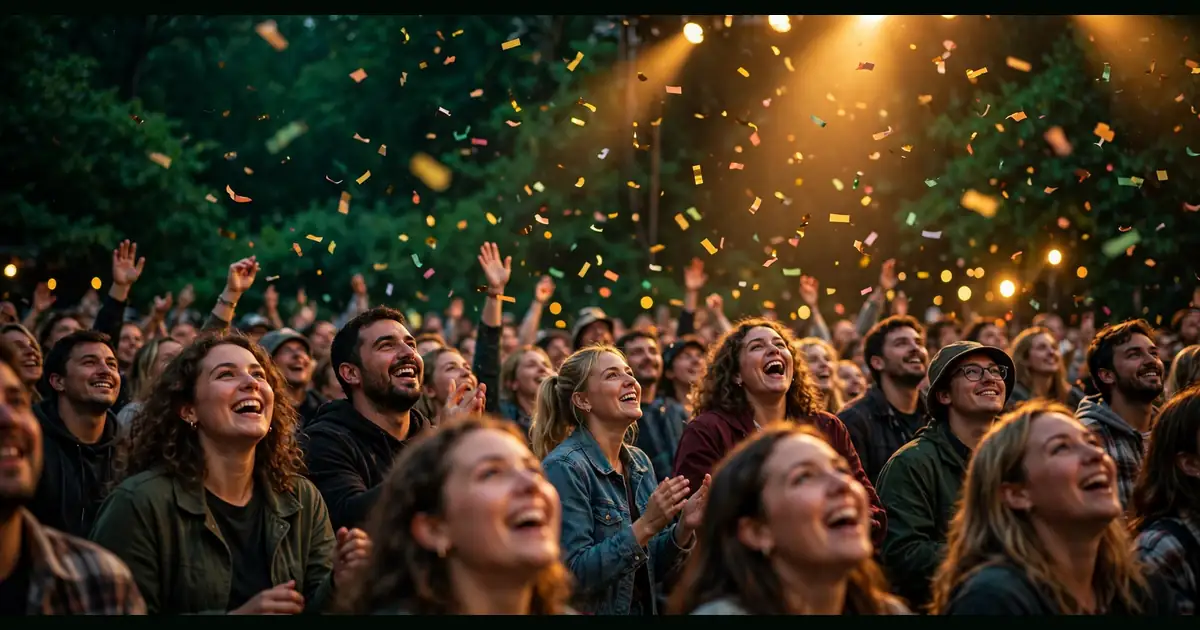
The best synonyms of entertainment include amusement, fun, recreation, diversion, pleasure, and show. Entertainment (US IPA: /ˌɛntɚˈteɪnmənt/ ) is anything that gives people fun, pleasure, or enjoyment in their free time, such as a film, a game, a concert, or a party. The best word depends on the occasion. For example, a show is something you watch, while a pastime is something you do yourself. Learning these 30 related words will help you talk about films, games, parties, and free time in clear, natural English.
10 Entertainment Synonyms at a Glance
| No. | Synonym | Simple Meaning |
| 1 | Amusement | Fun activity that keeps you happy |
| 2 | Fun | Light enjoyment that makes you smile |
| 3 | Recreation | Pleasant activity in your free time |
| 4 | Diversion | Something that takes your mind off worries |
| 5 | Enjoyment | The pleasure you feel from something good |
| 6 | Pleasure | A feeling of happiness or satisfaction |
| 7 | Pastime | A hobby or activity done for fun |
| 8 | Show | A performance you watch for fun |
| 9 | Performance | A play or concert for an audience |
| 10 | Party | A social gathering with food and music |
These words all describe fun and enjoyment, but they are not all the same. Some are quiet and personal, like a hobby or a pastime, while others are big and public, like a carnival or a gala. This guide explains each word with a simple meaning, pronunciation, and two easy examples.
Meaning of Entertainment
Definition
Entertainment (noun): Activities, shows, or events that give people fun, pleasure, or enjoyment in their free time.
The word can also describe the business that makes such fun — films, music, games, and television are all part of the entertainment industry.
Examples
- The hotel offers live music and games as evening entertainment for its guests.
- Good books were our only entertainment during the long winter nights.
Grammar and Usage
Entertainment is usually an uncountable noun. You say “some entertainment” or “a lot of entertainment,” not “an entertainment” in everyday speech.
Common patterns are entertainment for someone, provide entertainment, and an evening of entertainment. For example, “The school arranged entertainment for the children” means it planned fun activities for them.
The word also appears in set phrases. The entertainment industry means the business of films, music, and television, and live entertainment means shows performed in front of an audience.
Connotative Meaning
(Connotation means the feelings, ideas, or emotions that a word suggests beyond its basic meaning.)
- Positive tone: Fun, joy, relaxation, and good company — the usual feeling of the word.
- Negative tone: Sometimes it can suggest shallow fun that wastes time, as in “mere entertainment.”
- Neutral tone: In business and news reports, simply the industry of films, music, and shows.
Because entertainment is a broad word, careful writers choose a sharper synonym when they mean one kind of fun — a show for watching, a game for playing, or a party for celebrating.
Etymology
The word entertainment came into English from French, and its roots carry a warm lesson about spending time together.
- Source language: Old French entretenement, from the verb entretenir.
- Original meaning: Entretenir joins entre- (“between, together”) with tenir (“to hold”), from Latin tenere — literally, “to hold together.” Early entertainment meant keeping someone company and holding their attention.
- Related word: The same Latin root gives English the word maintain, which also means to hold something in a good state.
Pronunciation (US & UK – IPA)
US: /ˌɛntɚˈteɪnmənt/
UK: /ˌɛntəˈteɪnmənt/
The main difference is the middle vowel: Americans say it with an r-sound, while British speakers say it without one.
Syllables
en-ter-tain-ment
The word has four syllables, and the stress falls on the third syllable.
Main Content: 30 Synonyms of Entertainment
1. Amusement (Noun)
US IPA: /əˈmjuzmənt/ | UK IPA: /əˈmjuzmənt/
Meaning: Amusement is fun that keeps you happy and busy, such as games, rides, and shows at a fair. It is the closest general synonym for entertainment.
Examples:
- The children found great amusement in the puppet show.
- We spent the afternoon at an amusement park full of rides.
2. Fun (Noun)
US IPA: /fʌn/ | UK IPA: /fʌn/
Meaning: Fun is light enjoyment that makes you laugh, smile, or feel happy. It is the simplest and most everyday word in this list.
Examples:
- We had so much fun playing cards all evening.
- The picnic was pure fun from start to finish.
3. Recreation (Noun)
US IPA: /ˌɹɛkɹiˈeɪʃən/ | UK IPA: /ˌɹɛkɹiˈeɪʃən/
Meaning: Recreation is pleasant activity done in free time to rest and refresh yourself, such as swimming, walking, or playing tennis.
Examples:
- The town built a new centre for sports and recreation.
- Reading and gardening are her favourite forms of recreation.
4. Diversion (Noun)
US IPA: /dɪˈvɝʒən/ | UK IPA: /daɪˈvɜːʃən/
Meaning: A diversion is something enjoyable that takes your mind off work or worries for a while. It is a slightly formal word.
Examples:
- A good film was a welcome diversion after a hard week.
- She took up painting as a pleasant diversion from her job.
5. Enjoyment (Noun)
US IPA: /ɪnˈdʒɔɪmənt/ | UK IPA: /ɪnˈdʒɔɪmənt/
Meaning: Enjoyment is the pleasure you feel when you do or watch something good. It describes the feeling, not the activity itself.
Examples:
- He listened to the music with great enjoyment.
- The children’s enjoyment was clear from their laughter.
6. Pleasure (Noun)
US IPA: /ˈplɛʒɚ/ | UK IPA: /ˈplɛʒə/
Meaning: Pleasure is a feeling of happiness or satisfaction, often from something simple like good food, music, or company.
Examples:
- It was a pleasure to hear her sing again.
- He takes great pleasure in long evening walks.
7. Pastime (Noun)
US IPA: /ˈpæstaɪm/ | UK IPA: /ˈpɑːstaɪm/
Meaning: A pastime is an activity you do regularly for fun in your free time, such as chess, fishing, or collecting stamps.
Examples:
- Photography has been his favourite pastime for years.
- Board games are a popular family pastime on rainy days.
8. Hobby (Noun)
US IPA: /ˈhɑbi/ | UK IPA: /ˈhɒbi/
Meaning: A hobby is an activity you do regularly for pleasure, not for work — painting, cooking, gardening, or playing an instrument.
Examples:
- Her new hobby is baking bread every weekend.
- He turned his hobby of model-making into a small business.
9. Game (Noun)
US IPA: /ɡeɪm/ | UK IPA: /ɡeɪm/
Meaning: A game is a fun activity with rules, played alone or with others — a card game, a video game, or a football match.
Examples:
- Let us play a game while we wait for dinner.
- Chess is a quiet game that needs deep thought.
10. Show (Noun)
US IPA: /ʃoʊ/ | UK IPA: /ʃəʊ/
Meaning: A show is a performance you watch for fun — a play, a concert, a television programme, or a magic act.
Examples:
- We bought tickets for a comedy show on Friday.
- The talent show drew a large crowd every year.
11. Performance (Noun)
US IPA: /pɚˈfɔɹməns/ | UK IPA: /pəˈfɔːməns/
Meaning: A performance is a play, concert, dance, or act put on for an audience, usually on a stage.
Examples:
- The singer gave a brilliant performance last night.
- The school’s end-of-year performance filled the hall.
12. Spectacle (Noun)
US IPA: /ˈspɛktəkəl/ | UK IPA: /ˈspɛktəkəl/
Meaning: A spectacle is a large, impressive public display that many people watch, such as fireworks, a parade, or a grand ceremony.
Examples:
- The fireworks display was a wonderful spectacle.
- The opening ceremony was a spectacle of colour and music.
13. Play (Noun)
US IPA: /pleɪ/ | UK IPA: /pleɪ/
Meaning: A play is a drama performed on a stage by actors. The word also means children’s fun activity in general.
Examples:
- The students performed a play about a famous scientist.
- Outdoor play keeps young children healthy and happy.
14. Merriment (Noun)
US IPA: /ˈmɛɹɪmənt/ | UK IPA: /ˈmɛrɪmənt/
Meaning: Merriment is happy laughter and cheerful fun, especially when people celebrate together.
Examples:
- The hall rang with merriment during the wedding feast.
- There was much merriment when the old friends met again.
15. Delight (Noun)
US IPA: /dəˈlaɪt/ | UK IPA: /dəˈlaɪt/
Meaning: Delight is great pleasure and joy, often from a happy surprise or a beautiful thing.
Examples:
- To her delight, the band played her favourite song.
- The garden in spring was a delight to the eyes.
16. Distraction (Noun)
US IPA: /dɪsˈtɹækʃən/ | UK IPA: /dɪsˈtɹækʃən/
Meaning: A distraction is something enjoyable that pulls your attention away from work, worry, or pain for a while.
Examples:
- Music was a welcome distraction during the long journey.
- He needed a distraction from the stress of the exams.
17. Relaxation (Noun)
US IPA: /ˌɹilækˈseɪʃən/ | UK IPA: /ˌɹiːlækˈseɪʃən/
Meaning: Relaxation is rest and calm after work or stress — the quiet side of entertainment, such as a spa day or a slow evening at home.
Examples:
- A weekend by the lake gave us complete relaxation.
- Soft music and a warm bath are her idea of relaxation.
18. Leisure (Noun)
US IPA: /ˈliːʒɚ/ | UK IPA: /ˈlɛʒə/
Meaning: Leisure is free time that you can spend on fun and rest, as opposed to work or duty.
Examples:
- She spends her leisure hours reading and walking.
- The new park gives the whole town more leisure space.
19. Festivity (Noun)
US IPA: /fɛˈstɪvəti/ | UK IPA: /fɛˈstɪvəti/
Meaning: Festivity is joyful celebration, often with food, music, and decorations, at a festival or holiday.
Examples:
- The streets were full of festivity during the spring festival.
- Music and dancing added to the festivity of the evening.
20. Celebration (Noun)
US IPA: /ˌsɛləˈbɹeɪʃən/ | UK IPA: /ˌsɛləˈbɹeɪʃən/
Meaning: A celebration is a special event that marks something happy, such as a birthday, a wedding, or a national holiday.
Examples:
- The whole village joined the celebration of the harvest.
- They planned a big celebration for their parents’ anniversary.
21. Party (Noun)
US IPA: /ˈpɑɹti/ | UK IPA: /ˈpɑːti/
Meaning: A party is a social gathering where people eat, drink, talk, dance, and have fun together.
Examples:
- We are throwing a surprise party for our teacher.
- The birthday party lasted until midnight.
22. Gala (Noun)
US IPA: /ˈɡeɪlə/ | UK IPA: /ˈɡɑːlə/
Meaning: A gala is a large, formal celebration or social event, often with fine clothes, music, and dancing, sometimes held to raise money for charity.
Examples:
- The charity gala raised money for the children’s hospital.
- Guests arrived in evening dress for the winter gala.
23. Carnival (Noun)
US IPA: /ˈkɑɹnɪvəl/ | UK IPA: /ˈkɑːnɪvəl/
Meaning: A carnival is a travelling fair or festival with rides, games, music, and colourful costumes.
Examples:
- The children rode the merry-go-round at the carnival.
- Every February the town holds a carnival with parades.
24. Pageant (Noun)
US IPA: /ˈpædʒənt/ | UK IPA: /ˈpædʒənt/
Meaning: A pageant is a public show or contest with costumes and performances, such as a beauty pageant or a historical pageant.
Examples:
- The school staged a Christmas pageant for parents.
- She won the county beauty pageant last summer.
25. Extravaganza (Noun)
US IPA: /ɪkˌstɹævəˈɡænzə/ | UK IPA: /ɪkˌstɹævəˈɡænzə/
Meaning: An extravaganza is a large, lavish, and spectacular show, full of music, colour, and excitement.
Examples:
- The New Year’s Eve extravaganza filled the whole stadium.
- The musical was a true extravaganza of dance and song.
26. Frolic (Noun)
US IPA: /ˈfɹɑlɪk/ | UK IPA: /ˈfɹɒlɪk/
Meaning: A frolic is lively, carefree play — running, jumping, and laughing without a care in the world.
Examples:
- The lambs enjoyed a frolic in the spring meadow.
- After the exams, the students had a carefree frolic by the river.
27. Revelry (Noun)
US IPA: /ˈɹɛvəlɹi/ | UK IPA: /ˈɹɛvəlɹi/
Meaning: Revelry is loud, joyful partying and celebration, often late into the night.
Examples:
- The streets echoed with revelry on New Year’s Eve.
- After the victory, the fans’ revelry lasted until dawn.
28. Escapism (Noun)
US IPA: /ɪˈskeɪpɪzəm/ | UK IPA: /ɪˈskeɪpɪzəm/
Meaning: Escapism is fun activity — a film, a novel, a game — that helps you forget daily worries for a while.
Examples:
- Fantasy novels offer pure escapism after a busy day.
- For many people, cinema is a pleasant form of escapism.
29. Nightlife (Noun)
US IPA: /ˈnaɪtlaɪf/ | UK IPA: /ˈnaɪtlaɪf/
Meaning: Nightlife is evening fun in a town or city — clubs, bars, theatres, restaurants, and late-night shows.
Examples:
- The city is famous for its lively nightlife.
- Tourists come here to enjoy the nightlife by the harbour.
30. Concert (Noun)
US IPA: /ˈkɑnsɚt/ | UK IPA: /ˈkɒnsət/
Meaning: A concert is a live music performance given for an audience, in a hall, a stadium, or outdoors.
Examples:
- We bought front-row tickets for the rock concert.
- The orchestra’s summer concert drew thousands of listeners.
Synonyms for Entertainment at Home
At home, entertainment is quiet and personal. A game brings the family to the table, a hobby fills an evening with making or learning, and a pastime like reading or gardening turns free hours into pleasure. Television and streaming have added the show to the living room, but the oldest home entertainment is still people playing and talking together.
The shade of meaning matters. A game needs rules and players, while a pastime can be solitary and slow. Choose hobby when the activity is regular and skilled, and pastime when it is simply how someone passes the time.
Synonyms for Entertainment in Public
Public entertainment is big, bright, and shared. A concert fills a hall with music, a spectacle like fireworks fills the sky, and a carnival fills the streets with rides and colour. Cities also offer nightlife — theatres, clubs, and restaurants that come alive after dark. These are the words for fun that hundreds or thousands of people enjoy at once.
History books about kings and courts use the same vocabulary, which is why this list pairs naturally with our guide to synonyms of king: every royal court in those stories staged shows, feasts, and pageants for its guests.
Synonyms for Entertainment for Children
Children’s entertainment is active, simple, and full of laughter. Here are the four words you will meet most often:
- Game — Meaning: a fun activity with rules, played alone or with others. Examples: The children played a guessing game at the party. A board game kept them busy all afternoon.
- Play — Meaning: free, joyful activity without strict rules. Examples: Outdoor play helps children grow strong. The park was full of play and laughter.
- Frolic — Meaning: lively, carefree running and laughing. Examples: The puppies enjoyed a frolic in the garden. After school, the children had a frolic in the park.
- Carnival — Meaning: a fair with rides, games, and shows. Examples: The carnival came to town with a big wheel. The children loved the carnival games and candy floss.
Another Word for Entertainment in Everyday Life
In everyday life, most entertainment is small and close at hand. Fun is the word for a good evening with friends, leisure is the free time itself, and relaxation is the calm that follows hard work. A pastime fills the quiet hours, and a celebration marks the happy days. You do not need a stage or a stadium — a good book, a shared meal, and a walk with friends are entertainment too.
Choosing these everyday words keeps your English natural and warm. Call it fun when you laugh, leisure when you rest, and save extravaganza for the rare night that truly deserves it.
Strong Synonyms for Entertainment
These are the biggest and closest words for large-scale, impressive entertainment — use them when the fun is grand and public.
- Amusement — fun that keeps you happy and busy, from fairs to shows.
- Spectacle — a large, impressive public display watched by many.
- Extravaganza — a lavish show full of music, colour, and excitement.
- Performance — a play, concert, or act put on for an audience.
- Show — a performance you watch for fun.
Positive Synonyms for Entertainment
These words carry the happiest feelings in the list — the right choice for joyful, warm writing. Describing people well is part of the same skill, as our guide to people and character synonyms shows.
- Fun — light enjoyment that makes you laugh and smile.
- Enjoyment — the pleasure you feel from something good.
- Delight — great pleasure and joy, often from a surprise.
- Merriment — happy laughter and cheerful celebration.
- Celebration — a special event marking something happy.
Synonyms and Antonyms for Entertainment
The synonyms above run on a scale: quiet personal fun like pastime and hobby at one end, and grand public fun like spectacle and extravaganza at the other. The antonyms of entertainment stand on the opposite side of that scale — words for dullness, duty, and hard work.
- Boredom (noun): The dull feeling of having nothing fun to do. Example: The long wait at the station filled us with boredom.
- Work (noun): Activity done as a duty or job, not for fun. Example: After a day of hard work, he wanted only rest.
- Drudgery (noun): Hard, dull, boring work done again and again. Example: Washing dishes felt like drudgery after the party.
- Monotony (noun): The dullness of a life or task that never changes. Example: The monotony of the routine made every day feel the same.
- Tedium (noun): The state of being bored by something slow and dull. Example: The tedium of the long meeting made everyone yawn.
Note: Boredom is the everyday opposite of entertainment. Work is the opposite in the sense of duty versus free time, where the contrast is about obligation, not feelings.
Frequently Asked Questions
What are the best synonyms of entertainment for everyday use?
For everyday English, the most useful words are fun, amusement, and show. Fun fits any light enjoyment, amusement fits fairs and games, and show fits anything you watch.
Save the grander words — spectacle, gala, and extravaganza — for big public events. Using them for a quiet evening at home makes your English sound exaggerated.
What is the difference between entertainment and fun?
Entertainment is the broad word: it covers every activity, show, or event that gives pleasure. Fun is narrower and lighter — it names the happy feeling itself, or a simple activity that causes it.
A film festival is entertainment, and the laughter during it is fun. In short, entertainment is what is offered, and fun is what you feel.
What is the difference between entertainment and recreation?
Recreation is activity done to refresh body and mind — sports, walking, swimming, and outdoor games. Entertainment is wider: it also includes watching shows, listening to music, and going to parties.
Playing tennis is both recreation and entertainment, but watching a play is entertainment without being recreation. The two words overlap, but recreation always involves doing something active.
What is a formal synonym for entertainment?
The most formal choices are amusement and diversion. Both appear in official writing, reports, and older books, and both sound polite without sounding stiff.
In a formal report you might write “evening amusement for guests” or “a welcome diversion from work.” For a business or news context, amusement is the safer formal word.
Conclusion
Learning the synonyms of entertainment helps you match your words to the real size of the fun. Quiet words like pastime, hobby, and relaxation suit evenings at home, while grand words like spectacle, gala, and extravaganza suit nights that fill a hall or a street. An old proverb draws the line between work and play:
“All work and no play makes Jack a dull boy.” — an old proverb
Precise words are part of that joy. When you can name the difference between a pastime and a spectacle, you describe pleasure more honestly — and you remember, as Shakespeare reminded us in As You Like It, that life itself is a kind of performance:
“All the world’s a stage, and all the men and women merely players.” — William Shakespeare, As You Like It, Act 2, Scene 7
Start by learning three new words from this list each day. Say them aloud with the pronunciation buttons, write one sentence for each, and review them at the end of the week. Keep building your vocabulary with our guides to synonyms of arrogant and synonyms of gangster — two word groups that often appear in the same stories as feasts, festivals, and celebrations.

Hello! I’m Irshad Ullah, scholar, content writer, motivational speaker and a linguist. I have 15 years experience of content writing on multiple topics which are recognized as socially, religiously and linguistically. I am also a versatile teacher, and have been teaching the subjects of aforesaid domains to the post graduate classes since the last 18 years.