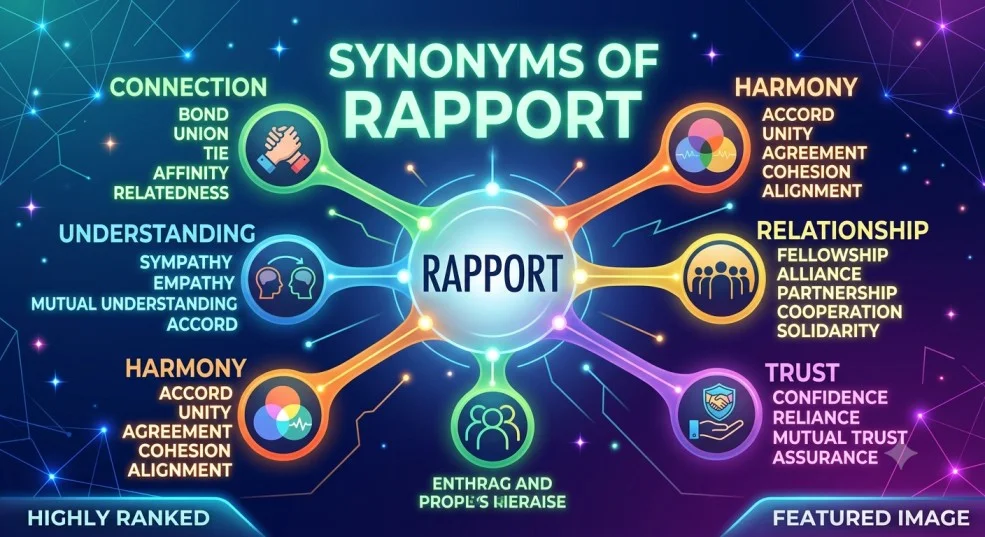
Imagine you meet a new coworker. Within ten minutes, you are laughing together and sharing ideas like old friends. That easy, warm connection is called rapport. People build rapport with teachers, clients, neighbors, and even strangers on a train. It happens when two people feel comfortable and understood.
Rapport is a common word in business, therapy, teaching, and daily conversation. People use it because it captures something simple but important: a good relationship built on trust and understanding. Learning the synonyms of rapport helps English learners and content writers avoid repeating the same word again and again. It also helps you pick the exact shade of meaning you need, whether you are writing a resume, a story, or a business email.
This article explores the meaning of rapport and looks closely at the synonyms of rapport, with examples, grammar notes, pronunciation, history, and word categories. By the end, you will have 30 new words ready to use in real conversations and writing.
Meaning of Rapport
Definition
Rapport (noun): A friendly relationship where people understand each other and feel comfortable together.
Examples
- The teacher built strong rapport with her students on the first day.
- Good salespeople know how to create rapport with customers quickly.
Connotative Meaning
- Positive tone: Rapport almost always sounds warm and friendly. It suggests trust, comfort, and ease between people.
- Negative tone: Rapport rarely carries a negative meaning. It is a positive word in nearly every context.
- Neutral tone: In formal or clinical settings, such as therapy notes, rapport is used in a calm, professional way without strong emotion.
(Connotation means the feeling or emotion a word carries, beyond its plain dictionary meaning.)
Etymology
- Rapport comes from the French word rapporter, meaning “to bring back” or “to relate.”
- The French noun rapport meant a connection or relation between things or people.
- It entered the English language in the late 1500s through French influence.
Short History
- Old English (450–1100): The word rapport did not exist yet. English speakers used native words like “kinship” or “friendship” instead.
- Middle English (1100–1500): Rapport was still not part of English. French words were entering English after the Norman Conquest, but rapport had not yet crossed over.
- Modern English (1500–Present): Rapport entered English from French in the late 16th century and grew popular in psychology and business language during the 20th century.
Pronunciation (US & UK – IPA)
- US: /ræˈpɔːr/
- UK: /ræˈpɔː/
Syllables
rap-port
Affixation Pattern of Rapport
- Root: port (from Latin portare, meaning “to carry”)
- Prefix: ra- (from French re-, meaning “back”)
- Suffix: none
Word formation:
- Rapport (noun) — the base word
- Rapporteur (noun) — a person who reports back, especially in formal meetings
- Rapport-building (compound adjective) — used to describe activities that create connection
A List of High Quality Synonyms of Rapport
Below are 30 useful synonyms of rapport. Each one includes pronunciation, meaning, and example sentences.
1. Connection (noun)
US /kəˈnɛkʃən/ | UK /kəˈnɛkʃn̩/
Meaning: A link or bond between people.
Examples:
- They felt an instant connection when they first talked.
- Good teachers build a connection with every student.
2. Bond (noun)
US /bɑːnd/ | UK /bɒnd/
Meaning: A close tie based on trust or shared feeling.
Examples:
- The two sisters share a strong bond.
- Working together for years created a real bond between them.
3. Relationship (noun)
US /rɪˈleɪʃənʃɪp/ | UK /rɪˈleɪʃn̩ʃɪp/
Meaning: The way two people connect and interact over time.
Examples:
- She has a friendly relationship with her manager.
- Building a good relationship takes time and honesty.
4. Affinity (noun)
US /əˈfɪnəti/ | UK /əˈfɪnəti/
Meaning: A natural liking or closeness toward someone or something.
Examples:
- He felt an affinity for his new classmates right away.
- Their shared love of music created an affinity between them.
5. Harmony (noun)
US /ˈhɑːrməni/ | UK /ˈhɑːməni/
Meaning: A peaceful and pleasant agreement between people.
Examples:
- The team worked in harmony to finish the project.
- Their marriage was full of harmony and respect.
6. Understanding (noun)
US /ˌʌndərˈstændɪŋ/ | UK /ˌʌndəˈstændɪŋ/
Meaning: A shared sense of knowing and accepting each other.
Examples:
- There was a quiet understanding between the old friends.
- Mutual understanding helped them solve the disagreement.
7. Empathy (noun)
US /ˈɛmpəθi/ | UK /ˈɛmpəθi/
Meaning: The ability to feel and understand another person’s emotions.
Examples:
- The counselor showed great empathy toward her clients.
- Empathy helps build trust between coworkers.
8. Chemistry (noun)
US /ˈkɛmɪstri/ | UK /ˈkɛmɪstri/
Meaning: A strong, natural connection that feels easy and exciting.
Examples:
- The actors had great chemistry on screen.
- You could feel the chemistry between the two speakers.
9. Camaraderie (noun)
US /ˌkɑːməˈrɑːdəri/ | UK /ˌkæməˈrɑːdəri/
Meaning: A friendly spirit shared among a group.
Examples:
- There was strong camaraderie among the soldiers.
- The camaraderie in the office made work feel fun.
10. Closeness (noun)
US /ˈkloʊsnəs/ | UK /ˈkləʊsnəs/
Meaning: A feeling of being emotionally near to someone.
Examples:
- Years of friendship built real closeness between them.
- The closeness of the team helped them win.
11. Accord (noun)
US /əˈkɔːrd/ | UK /əˈkɔːd/
Meaning: Agreement and friendly cooperation between people.
Examples:
- The two leaders reached an accord after the meeting.
- Their accord made the project run smoothly.
12. Kinship (noun)
US /ˈkɪnʃɪp/ | UK /ˈkɪnʃɪp/
Meaning: A feeling of closeness, as if connected like family.
Examples:
- She felt a sense of kinship with other writers.
- Kinship among neighbors made the street feel like home.
13. Link (noun)
US /lɪŋk/ | UK /lɪŋk/
Meaning: A connection that joins two people or things together.
Examples:
- Shared hobbies created a link between the new friends.
- There was a clear link between the mentor and student.
14. Tie (noun)
US /taɪ/ | UK /taɪ/
Meaning: A bond that connects people emotionally.
Examples:
- Family ties kept them close through hard times.
- A strong tie formed between the coach and the team.
15. Sympathy (noun)
US /ˈsɪmpəθi/ | UK /ˈsɪmpəθi/
Meaning: A feeling of shared understanding or caring for someone.
Examples:
- She showed sympathy for her friend’s situation.
- Sympathy between the two helped them talk openly.
16. Compatibility (noun)
US /kəmˌpætəˈbɪləti/ | UK /kəmˌpætəˈbɪləti/
Meaning: The quality of getting along well with someone.
Examples:
- Their compatibility made teamwork easy.
- Good compatibility is important in any partnership.
17. Friendship (noun)
US /ˈfrɛndʃɪp/ | UK /ˈfrɛndʃɪp/
Meaning: A close and caring relationship between friends.
Examples:
- Their friendship grew stronger every year.
- A true friendship is built on trust.
18. Unity (noun)
US /ˈjuːnəti/ | UK /ˈjuːnəti/
Meaning: A state of being joined together with shared purpose.
Examples:
- The team showed real unity during the crisis.
- Unity among neighbors made the event a success.
19. Attunement (noun)
US /əˈtuːnmənt/ | UK /əˈtjuːnmənt/
Meaning: A close, sensitive understanding of another person’s feelings.
Examples:
- The therapist’s attunement helped the client feel safe.
- Good parents show attunement to their child’s needs.
20. Fellowship (noun)
US /ˈfɛloʊʃɪp/ | UK /ˈfɛləʊʃɪp/
Meaning: A friendly feeling shared among a group of people.
Examples:
- The club was known for its warm fellowship.
- Fellowship among classmates made the trip enjoyable.
21. Solidarity (noun)
US /ˌsɑːlɪˈdærəti/ | UK /ˌsɒlɪˈdærəti/
Meaning: A strong feeling of support and togetherness.
Examples:
- The workers showed solidarity during the strike.
- Solidarity between the two teams grew during training.
22. Intimacy (noun)
US /ˈɪntəməsi/ | UK /ˈɪntɪməsi/
Meaning: A deep sense of closeness and trust.
Examples:
- Years together built real intimacy in their friendship.
- The intimacy of the conversation surprised her.
23. Alliance (noun)
US /əˈlaɪəns/ | UK /əˈlaɪəns/
Meaning: A close cooperative relationship between people or groups.
Examples:
- The two companies formed a strong alliance.
- Their alliance helped both sides succeed.
24. Communion (noun)
US /kəˈmjuːnjən/ | UK /kəˈmjuːnjən/
Meaning: A deep, shared sense of connection and understanding.
Examples:
- The writers felt a quiet communion over their shared craft.
- There was a sense of communion among the old friends.
25. Concord (noun)
US /ˈkɑːŋkɔːrd/ | UK /ˈkɒŋkɔːd/
Meaning: Peaceful agreement and friendly relations.
Examples:
- The two nations lived in concord for decades.
- Concord between the partners made the deal easy.
26. Mutuality (noun)
US /ˌmjuːtʃuˈæləti/ | UK /ˌmjuːtʃuˈæləti/
Meaning: A shared feeling or understanding between two people.
Examples:
- Their mutuality made decision-making simple.
- A sense of mutuality guided their friendship.
27. Trust (noun)
US /trʌst/ | UK /trʌst/
Meaning: A firm belief in someone’s honesty and reliability.
Examples:
- Trust is the foundation of any strong relationship.
- They built trust slowly over many years.
28. Partnership (noun)
US /ˈpɑːrtnərʃɪp/ | UK /ˈpɑːtnəʃɪp/
Meaning: A close working relationship built on cooperation.
Examples:
- Their partnership led to a successful business.
- A good partnership needs open communication.
29. Attachment (noun)
US /əˈtætʃmənt/ | UK /əˈtætʃmənt/
Meaning: A strong emotional bond toward someone.
Examples:
- The child formed a deep attachment to her grandmother.
- Years of friendship created a lasting attachment.
30. Companionship (noun)
US /kəmˈpænjənʃɪp/ | UK /kəmˈpænjənʃɪp/
Meaning: The comfort and friendship of being with someone.
Examples:
- The dog gave her companionship during lonely days.
- Companionship at work made long hours easier.
Prototype Meaning
When most people hear the word rapport, they picture two people talking easily, smiling, and understanding each other without effort. It is the feeling you get during a good conversation, where there is no awkwardness and both sides feel heard. This is the prototype, or most typical, meaning of rapport: a warm, natural connection built through trust and shared understanding.
Prototype Categorization
Grouping the synonyms of rapport into categories makes it easier to choose the right word for each situation.
- Emotional closeness: intimacy, closeness, attachment, communion
- Shared understanding: understanding, empathy, attunement, sympathy
- Group connection: camaraderie, fellowship, solidarity, unity
- Formal or working relationships: partnership, alliance, accord, concord
- Natural liking: affinity, chemistry, compatibility
This kind of categorization helps writers pick the synonym that matches their tone and context. A business email might need “partnership” or “accord,” while a personal story might need “closeness” or “chemistry.” Understanding these categories makes your writing more precise and natural.
Antonyms of Rapport
- Discord (noun): Disagreement or conflict between people.
- Estrangement (noun): A state of being distant or disconnected from someone.
- Hostility (noun): Unfriendly or aggressive feelings toward someone.
- Alienation (noun): A feeling of being separated or cut off from others.
- Tension (noun): Strained or uncomfortable feelings between people.
Short Questions and Answers
- What does rapport mean? Rapport means a friendly connection where people understand and trust each other.
- When should rapport be used? Use rapport when describing a positive, comfortable relationship, especially in social, teaching, or business settings.
- Is rapport positive or negative? Rapport is almost always positive. It describes a good, trusting relationship.
- How is it different from similar words? Rapport focuses on mutual understanding and comfort, while words like “friendship” focus more on long-term personal care, and “chemistry” focuses on natural excitement or attraction.
Conclusion
Learning the synonyms of rapport gives you more tools to express connection and understanding in different ways. It improves your vocabulary and helps you sound more natural in both speaking and writing. Knowing many synonyms of rapport also strengthens your writing by avoiding repeated words and keeping readers interested. Whether you are describing a friendship, a business partnership, or a warm conversation, these 30 words give you the right choice for every situation. Keep practicing the synonyms of rapport daily, and your English confidence will grow with every new word you use.

I am a linguist with 15 years of experience in English language teaching, including postgraduate-level instruction. My expertise includes English grammar, and I contribute as a content and blog writer, producing scholarly and educational language resources.