The word goods refers to items, products, or materials that people buy, sell, use, or own. Imagine walking through a supermarket, shopping online, or managing a business inventory. In all these situations, the word goods appears naturally and frequently.
The term goods is commonly used in business, trade, economics, transportation, and everyday conversations. Learning synonyms of goods is important for English learners, writers, students, and content creators because it helps improve vocabulary, avoid repetition, and communicate more precisely.
This article explores the meaning of goods and its synonyms through easy definitions, examples, pronunciation, grammar, history, connotative meanings, and semantic categories. By understanding these related words, learners can strengthen both their writing and speaking skills.
Meaning of Goods
Definition
Goods (Noun):
Goods are physical items, products, materials, or possessions that can be bought, sold, owned, transported, or used.
Examples
- The store received new goods this morning.
- Imported goods are often more expensive.
Connotative Meaning
(Connotation means the emotional or cultural feeling associated with a word beyond its dictionary meaning.)
- Positive tone: valuable goods, quality goods, luxury goods
- Negative tone: stolen goods, damaged goods, counterfeit goods
- Neutral tone: consumer goods, household goods, industrial goods
Etymology
- Origin: Old English gōd
- Source language: Germanic languages
- Original meaning: something beneficial, valuable, or useful
Short History of the Keyword
- Old English (450–1100): Used to describe beneficial possessions and property.
- Middle English (1100–1500): Expanded to include merchandise and trade items.
- Modern English (1500–Present): Became a standard commercial and legal term.
Pronunciation (US & UK – IPA)
- US: /ɡʊdz/
- UK: /ɡʊdz/
Syllables
goods
Affixation Pattern of Goods
- Root: good
- Prefix: none
- Suffix: -s (plural marker)
Word Formation of the Keyword
- good (adjective)
- good (noun)
- goods (plural noun)
- goodness (noun)
- goodly (adjective/adverb)
- goods-related (adjective)
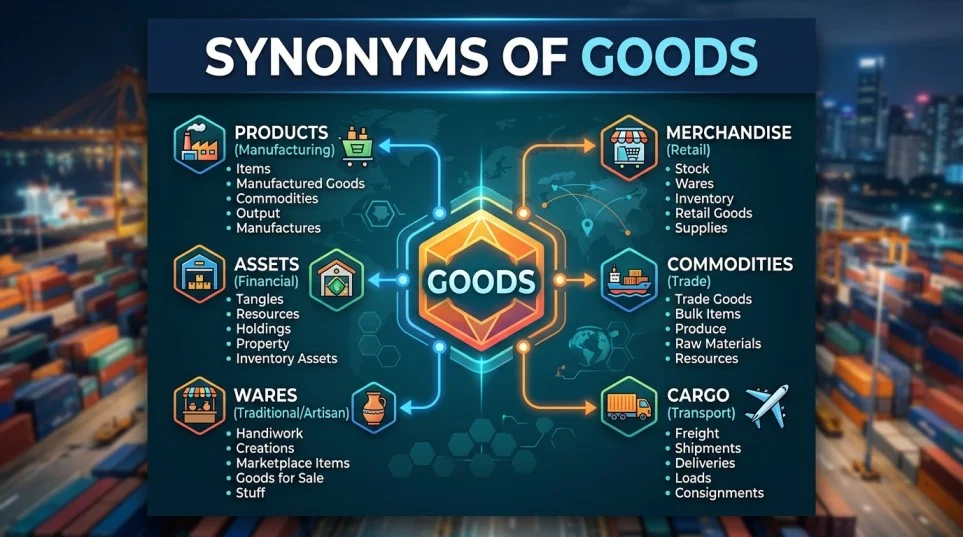
Synonyms of Goods
1. Products (Noun)
US: /ˈprɑːdʌkts/ | UK: /ˈprɒdʌkts/
Meaning: Things manufactured or created for sale.
Examples:
- The company launched new products.
- Organic products are popular today.
2. Merchandise (Noun)
US: /ˈmɝːtʃəndaɪz/ | UK: /ˈmɜːtʃəndaɪz/
Meaning: Goods sold in stores or markets.
Examples:
- The shop displayed new merchandise.
- Damaged merchandise was returned.
3. Commodities (Noun)
US: /kəˈmɑːdətiz/ | UK: /kəˈmɒdətiz/
Meaning: Trade goods or raw materials.
Examples:
- Oil is one of the world’s major commodities.
- Agricultural commodities affect markets.
4. Items (Noun)
US: /ˈaɪtəmz/ | UK: /ˈaɪtəmz/
Meaning: Individual objects or products.
Examples:
- Several items were missing.
- These items are on sale.
5. Articles (Noun)
US: /ˈɑːrtɪkəlz/ | UK: /ˈɑːtɪkəlz/
Meaning: Particular objects or goods.
Examples:
- Luxury articles attract wealthy buyers.
- Household articles filled the shelves.
6. Wares (Noun)
US: /werz/ | UK: /weəz/
Meaning: Goods offered for sale.
Examples:
- Vendors displayed their wares.
- Handmade wares sold quickly.
7. Merchandise Items (Noun)
US: /ˈmɝːtʃəndaɪz/ | UK: /ˈmɜːtʃəndaɪz/
Meaning: Commercial products for sale.
Examples:
- The warehouse stores merchandise items.
- Seasonal merchandise arrived today.
8. Supplies (Noun)
US: /səˈplaɪz/ | UK: /səˈplaɪz/
Meaning: Materials or goods available for use.
Examples:
- Medical supplies were delivered.
- Office supplies ran out.
9. Stock (Noun)
US: /stɑːk/ | UK: /stɒk/
Meaning: Goods kept for sale.
Examples:
- The stock sold quickly.
- New stock arrives weekly.
10. Inventory (Noun)
US: /ˈɪnvəntɔːri/ | UK: /ˈɪnvəntri/
Meaning: Complete list of goods available.
Examples:
- The company checked inventory.
- Inventory levels increased.
11. Property (Noun)
US: /ˈprɑːpərti/ | UK: /ˈprɒpəti/
Meaning: Things owned by someone.
Examples:
- Personal property was insured.
- The property was valuable.
12. Possessions (Noun)
US: /pəˈzeʃənz/ | UK: /pəˈzeʃənz/
Meaning: Things a person owns.
Examples:
- She packed her possessions.
- Valuable possessions were protected.
13. Effects (Noun)
US: /ɪˈfekts/ | UK: /ɪˈfekts/
Meaning: Personal belongings.
Examples:
- His personal effects were returned.
- Travelers carried few effects.
14. Materials (Noun)
US: /məˈtɪriəlz/ | UK: /məˈtɪəriəlz/
Meaning: Substances used to make things.
Examples:
- Construction materials are expensive.
- Raw materials were imported.
15. Resources (Noun)
US: /ˈriːsɔːrsɪz/ | UK: /rɪˈzɔːsɪz/
Meaning: Useful materials or assets.
Examples:
- Natural resources are important.
- The company managed its resources.
16. Cargo (Noun)
US: /ˈkɑːrɡoʊ/ | UK: /ˈkɑːɡəʊ/
Meaning: Goods transported by vehicles.
Examples:
- The ship carried cargo.
- Cargo arrived safely.
17. Freight (Noun)
US: /freɪt/ | UK: /freɪt/
Meaning: Goods transported commercially.
Examples:
- Freight costs increased.
- The freight train departed.
18. Shipment (Noun)
US: /ˈʃɪpmənt/ | UK: /ˈʃɪpmənt/
Meaning: Goods sent from one place to another.
Examples:
- The shipment arrived early.
- International shipment takes time.
19. Produce (Noun)
US: /ˈproʊduːs/ | UK: /ˈprɒdjuːs/
Meaning: Agricultural goods.
Examples:
- Fresh produce was available.
- Local produce supports farmers.
20. Output (Noun)
US: /ˈaʊtpʊt/ | UK: /ˈaʊtpʊt/
Meaning: Goods produced by a system.
Examples:
- Factory output increased.
- Industrial output fell.
21. Yield (Noun)
US: /jiːld/ | UK: /jiːld/
Meaning: Amount produced.
Examples:
- Crop yield improved.
- The yield exceeded expectations.
22. Assets (Noun)
US: /ˈæsets/ | UK: /ˈæsets/
Meaning: Valuable owned resources.
Examples:
- The company sold assets.
- Assets increased in value.
23. Belongings (Noun)
US: /bɪˈlɔːŋɪŋz/ | UK: /bɪˈlɒŋɪŋz/
Meaning: Personal possessions.
Examples:
- She packed her belongings.
- Lost belongings were recovered.
24. Equipment (Noun)
US: /ɪˈkwɪpmənt/ | UK: /ɪˈkwɪpmənt/
Meaning: Tools and materials used for work.
Examples:
- The equipment arrived today.
- Safety equipment is required.
25. Materials Stock (Noun)
US: /məˈtɪriəlz stɑːk/ | UK: /məˈtɪəriəlz stɒk/
Meaning: Stored materials for future use.
Examples:
- The materials stock decreased.
- New supplies were ordered.
26. Consignment (Noun)
US: /kənˈsaɪnmənt/ | UK: /kənˈsaɪnmənt/
Meaning: Goods sent to another party.
Examples:
- The consignment reached the port.
- A large consignment was shipped.
27. Imports (Noun)
US: /ˈɪmpɔːrts/ | UK: /ˈɪmpɔːts/
Meaning: Goods brought into a country.
Examples:
- Imports increased this year.
- Foreign imports are taxed.
28. Exports (Noun)
US: /ˈekspɔːrts/ | UK: /ˈekspɔːts/
Meaning: Goods sent to another country.
Examples:
- Exports improved the economy.
- Agricultural exports expanded.
29. Merchandise Goods (Noun)
US: /ˈmɝːtʃəndaɪz/ | UK: /ˈmɜːtʃəndaɪz/
Meaning: Commercial products.
Examples:
- Merchandise goods filled the warehouse.
- Retailers purchased merchandise goods.
30. Artifacts (Noun)
US: /ˈɑːrtəfækts/ | UK: /ˈɑːtɪfækts/
Meaning: Human-made objects or items.
Examples:
- Ancient artifacts were displayed.
- Historical artifacts require protection.
Prototype Meaning
The most typical meaning of goods refers to physical products or items that people buy, sell, own, transport, or use. When most people hear the word, they imagine products in stores, warehouses, markets, or shipping containers.
Prototype Categorization
- Business and Commerce: products, merchandise, wares, inventory, stock
- Transportation: cargo, freight, shipment, consignment
- Ownership: property, possessions, belongings, assets
- Production: output, yield, produce, materials
- Trade: commodities, imports, exports
Categorization helps writers select the most accurate synonym according to context, audience, and purpose.
Antonyms of Goods
- Services (Noun): activities performed rather than physical products
- Liabilities (Noun): financial obligations or debts
- Deficiencies (Noun): shortages or lack of resources
- Losses (Noun): reductions in value or possessions
- Waste (Noun): unusable or discarded materials
Short Questions and Answers
- What does goods mean?
Goods are physical items, products, or possessions that can be bought, sold, owned, or used. - When should goods be used?
Use goods when discussing products, trade, commerce, transportation, or possessions. - Is goods positive or negative?
The word is generally neutral, but context can make it positive or negative. - How is it different from similar words?
Goods is broad, while words like cargo, inventory, and merchandise have more specific meanings.
Conclusion
Learning the word goods and its synonyms can greatly improve English vocabulary and communication skills. Understanding related words helps writers and speakers avoid repetition, express ideas more accurately, and communicate with greater confidence. Different synonyms work better in different situations, such as business, trade, transportation, or personal ownership. By studying pronunciation, meanings, history, and categories, learners develop a deeper understanding of English vocabulary. Regular practice with synonyms is one of the best ways to strengthen speaking, writing, reading, and overall language fluency.

I am a linguist with 15 years of experience in English language teaching, including postgraduate-level instruction. My expertise includes English grammar, and I contribute as a content and blog writer, producing scholarly and educational language resources.