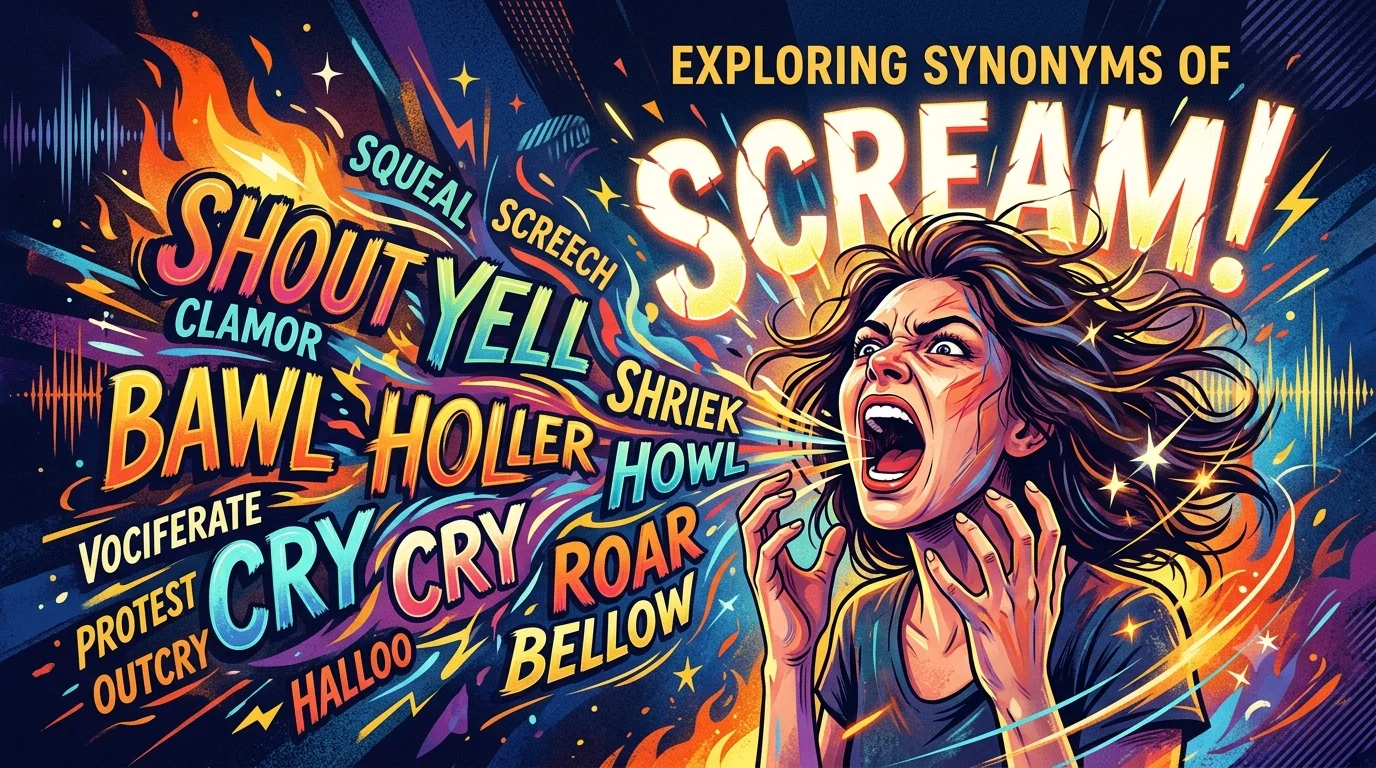
Imagine you walk into a dark room. Suddenly, a huge spider drops on your shoulder. You open your mouth and make a loud, sharp noise. You scream. People use this keyword every day because loud sounds happen often in real life. Learning fresh choices for this word helps English learners and content writers make their text much more exciting. When you use different words, your stories become alive. This article discusses the meaning of our keyword and its many new choices. We will look at clear examples, grammar rules, word history, exact pronunciation, and smart word categories.
Meaning of Scream
Definition
- Scream (verb): To make a long, loud, and very high cry because you are scared, hurt, or excited.
Examples
- The children scream with joy when they see the big birthday cake.
- Do not scream in the library because people are trying to read.
Connotative Meaning
(Connotation means the extra emotional feeling or idea that a word brings to your mind beside its literal definition.)
- Positive tone: Used to show extreme joy, excitement, or wild fun, like fans at a pop music show.
- Negative tone: Used to show deep fear, sudden pain, horror, anger, or panic.
- Neutral tone: Used to describe a loud, sharp sound without any strong good or bad feelings.
Etymology
- Origin: Came from Old Norse or Middle Dutch words like schremen, which meant to cry out loud.
- Old English (450–1100): The exact word did not exist yet, but people used similar Germanic sounds for loud cries.
- Middle English (1100–1500): The word became scremen, used by people to describe sharp, shrill sounds.
- Modern English (1500–Present): It became the word we use today to show high-pitched shouts of fear or joy.
Pronunciation (US & UK – IPA)
- US: /skriːm/
- UK: /skriːm/
Syllables
- scream
Affixation Pattern of Scream
- Root: scream
- Prefix: None
- Suffix: None
- Screamer (noun): A person or thing that makes a loud cry.
- Screaming (adjective): Making a very loud, sharp noise.
- Screamingly (adverb): Doing something in a way that causes loud noise or extreme reaction.
Synonyms of Scream
1. Shriek (verb)
- US: /ʃriːk/ | UK: /ʃriːk/
- Meaning: To make a very high, sharp cry when you are surprised or scared.
- The girls shriek when the small mouse runs across the kitchen floor.
- A loud bird began to shriek early in the morning.
2. Yell (verb)
- US: /jel/ | UK: /jel/
- Meaning: To shout in a loud voice because you are angry or want someone far away to hear you.
- The soccer coach had to yell so the players could hear him.
- Please do not yell at me because I can hear you perfectly.
3. Shout (verb)
- US: /ʃaʊt/ | UK: /ʃaʊt/
- Meaning: To speak very loudly to get attention or express strong feelings.
- We had to shout over the noise of the loud traffic.
- The fans shout with excitement when their team scores a goal.
4. Cry (verb)
- US: /kraɪ/ | UK: /kraɪ/
- Meaning: To call out loudly to show pain, fear, or surprise.
- The lost boy began to cry out for his mother in the crowd.
- A voice would cry for help from the dark woods.
5. Howl (verb)
- US: /haʊl/ | UK: /haʊl/
- Meaning: To make a long, loud, sad sound like a wolf or a person in pain.
- The strong winds howl through the trees during the storm.
- The hurt child started to howl after he bumped his knee.
6. Screech (verb)
- US: /skriːtʃ/ | UK: /skriːtʃ/
- Meaning: To make a high, harsh, unpleasant sound that hurts the ears.
- The car brakes screech when the driver stops suddenly.
- The wild monkeys screech at each other in the jungle.
7. Squall (verb)
- US: /skwɔːl/ | UK: /skwɔːl/
- Meaning: To cry out loudly and noisily like a baby.
- The hungry babies squall until they get their milk.
- He heard the birds squall from the top of the roof.
8. Bellow (verb)
- US: /ˈbeloʊ/ | UK: /ˈbeləʊ/
- Meaning: To shout in a deep, loud, roaring voice like a bull.
- The angry boss began to bellow orders at the workers.
- The large animals bellow across the wide field.
9. Roar (verb)
- US: /rɔːr/ | UK: /rɔː/
- Meaning: To make a very deep, loud, powerful sound to show anger or power.
- The lions roar to tell other animals to stay away.
- The crowd will roar when the rock star walks onto the stage.
10. Bawl (verb)
- US: /bɔːl/ | UK: /bɔːl/
- Meaning: To cry or shout loudly without stopping.
- Little children often bawl when they lose their favorite toys.
- Do not bawl like a baby over a small problem.
11. Holler (verb)
- US: /ˈhɑːlər/ | UK: /ˈhɒlə/
- Meaning: To shout or call out loudly in an informal way.
- You can holler for me if you need help in the yard.
- The workers holler to each other across the big building site.
12. Squeal (verb)
- US: /skwiːl/ | UK: /skwiːl/
- Meaning: To make a long, high, thin sound of excitement or fear.
- The puppies squeal with happiness when their owner comes home.
- The pigs squeal loudly when it is time to eat.
13. Wail (verb)
- US: /weɪl/ | UK: /weɪl/
- Meaning: To make a long, high cry of deep sadness or grief.
- The sad people wail after hearing the bad news.
- The sirens of the ambulance wail down the street.
14. Yowl (verb)
- US: /jaʊl/ | UK: /jaʊl/
- Meaning: To make a loud, long, mournful cry of pain or distress.
- The outdoor cats yowl outside my bedroom window all night.
- The hurt dog started to yowl when its paw was touched.
15. Caterwaul (verb)
- US: /ˈkætərwɔːl/ | UK: /ˈkætəwɔːl/
- Meaning: To make a shrill, unpleasant, howling noise like a fighting cat.
- The bad singers caterwaul on the stage during the show.
- Why do those birds caterwaul so early in the morning?
16. Vociferate (verb)
- US: /voʊˈsɪfəreɪt/ | UK: /vəˈsɪfəreɪt/
- Meaning: To shout or complain very loudly and strongly.
- The angry voters vociferate against the new laws outside the hall.
- He began to vociferate his objections to the plan.
17. Clamor (verb)
- US: /ˈklæmər/ | UK: /ˈklæmə/
- Meaning: To shout loudly as a big group to demand something.
- The hungry people clamor for food outside the store.
- The kids clamor for attention from their busy teacher.
18. Whoop (verb)
- US: /wʊp/ | UK: /huːp/
- Meaning: To make a loud, excited shout to show great joy or victory.
- The players whoop when they win the final game.
- They whoop with delight during the fun ride.
19. Cheer (verb)
- US: /tʃɪr/ | UK: /tʃɪə/
- Meaning: To shout words of praise, joy, or support.
- The crowd began to cheer when the runner crossed the line.
- We cheer for our friends during the school play.
20. Call (verb)
- US: /kɔːl/ | UK: /kɔːl/
- Meaning: To shout out loudly to get someone’s attention from a distance.
- I heard my mother call my name from the kitchen.
- Please call out if you get lost in the forest.
21. Ululate (verb)
- US: /ˈjʊljəleɪt/ | UK: /ˈʌljʊleɪt/
- Meaning: To howl or wail as an expression of strong grief or joy.
- The women ululate during the traditional wedding party.
- The old singers ululate a sad song at the funeral.
22. Exclaim (verb)
- US: /ɪkˈskleɪm/ | UK: /ɪkˈskleɪm/
- Meaning: To say something suddenly and loudly because of surprise or excitement.
- “Look at the beautiful rainbow!” she had to exclaim.
- The boy will exclaim in shock when he sees the mess.
23. Squawk (verb)
- US: /skwɔːk/ | UK: /skwɔːk/
- Meaning: To make a loud, sharp, harsh noise like a frightened bird.
- The large chickens squawk when you walk near their nests.
- The manager started to squawk about the missing money.
24. Yap (verb)
- US: /jæp/ | UK: /jæp/
- Meaning: To make sharp, loud, high-pitched barks or talk noisily.
- Small dogs yap at strangers who walk past the house.
- Stop your friends before they yap about our secret plan.
25. Pipe (verb)
- US: /paɪp/ | UK: /paɪp/
- Meaning: To speak or cry in a high-pitched, thin voice.
- The small child began to pipe up with a question.
- Birds pipe their small songs early in the garden.
26. Bark (verb)
- US: /bɑːrk/ | UK: /bɑːk/
- Meaning: To shout out short, loud, angry words suddenly.
- The strict officer began to bark orders at the team.
- He would bark his words when he was in a big hurry.
27. Hail (verb)
- US: /heɪl/ | UK: /heɪl/
- Meaning: To call out to a person or ship to greet them or stop them.
- You should hail a taxi if you want to get home fast.
- The sailors hail the passing ship across the open sea.
28. Bay (verb)
- US: /beɪ/ | UK: /beɪ/
- Meaning: To make a long, deep, loud cry like hunting dogs.
- The hounds bay at the moon deep in the dark night.
- The angry crowd began to bay for immediate justice.
29. Skirl (verb)
- US: /skɜːrl/ | UK: /skɜːl/
- Meaning: To make a shrill, high-pitched sound like bagpipes.
- The wind began to skirl through the narrow mountain paths.
- We heard the music skirl across the green hills.
30. Sound (verb)
- US: /saʊnd/ | UK: /saʊnd/
- Meaning: To make a loud noise to give a warning or signal.
- The guards sound the alarm when they see danger.
- The horns sound loudly to start the big race.
Prototype Meaning
The most typical meaning of scream is a sudden, very loud, high-pitched human cry caused by intense fear or terror. When people hear this word, they instantly imagine someone opening their mouth wide in a scary situation, like watching a horror movie or escaping danger. It represents a fast, automatic physical reaction that cuts through other noises to signal an emergency.
Prototype Categorization
- High-Pitched Sounds (Fear/Surprise): Shriek, screech, squeal, pipe, skirl.
- Deep/Powerful Shouts (Anger/Authority): Bellow, roar, bark, yap.
- Sad/Painful Cries (Grief/Distress): Howl, wail, yowl, caterwaul, bawl, squall.
- General/Loud Shouting (Communication/Joy): Yell, shout, cry, holler, clamor, vociferate, whoop, cheer, call, exclaim, squawk, hail, bay, sound, ululate.
Grouping these words helps writers select the best word because it matches the exact mood, pitch, and reason for the loud sound.
Antonyms of Scream
- Whisper (verb): To speak in a very soft, quiet voice using only your breath.
- Mumble (verb): To speak quietly and unclearly so that others cannot hear the words well.
- Murmur (verb): To make a low, continuous, soft sound that feels calm.
- Silence (noun): A complete lack of sound or noise.
Short Questions and Answers
- What does scream mean? It means to make a very loud, sharp, high-pitched cry from fear, pain, or joy.
- When should scream be used? Use it when a character feels extreme emotions like terror, intense pain, or wild excitement.
- Is scream positive or negative? It can be both; it is negative during danger, but positive when fans cheer happily.
- How is it different from similar words? A scream is always high and sharp, while a bellow is deep, and a whisper is quiet.
Conclusion
Learning the keyword scream and its many rich synonyms changes the way you share ideas. It improves vocabulary and strengthens your writing and speaking skills immediately. Choosing the right words helps you avoid repetition and builds your English confidence in daily conversations. When you replace common words with exact options like shriek or bellow, your text becomes much more colorful and fun to read. Try to practice these new terms every day in your sentences. Your English stories will sound much more professional and engaging to everyone.

I am a linguist with 15 years of experience in English language teaching, including postgraduate-level instruction. My expertise includes English grammar, and I contribute as a content and blog writer, producing scholarly and educational language resources.