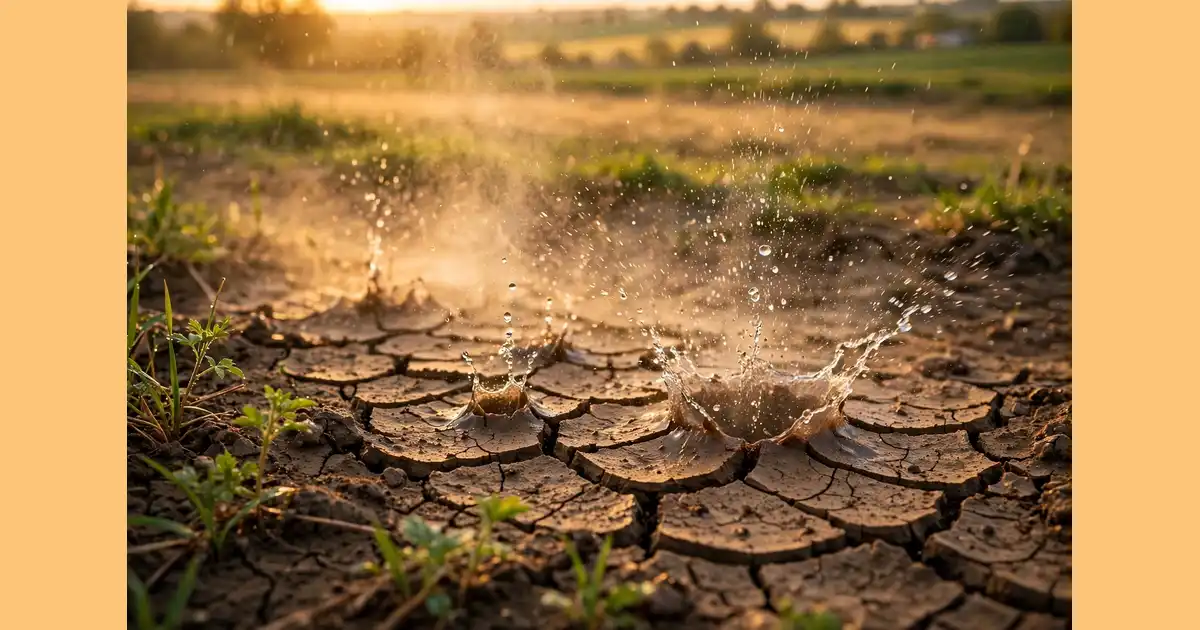
The word for the smell after rain is petrichor (IPA: /ˈpɛtrɪkɔr/), the earthy scent that rises from dry soil and rock when rain finally falls on it. Around it sits a whole family: geosmin, the earth-smell compound made by soil bacteria; ozone, the sharp smell before a storm; and everyday phrases like rain smell and scent of rain. Some of these words name the smell itself, some name the rain that releases it, and some name the fresh world it leaves behind. These 30 words will help you describe a rainy day exactly.
10 Words for the Smell After Rain at a Glance
| No. | Word | Meaning |
| 1 | Petrichor | Earthy scent when rain falls |
| 2 | Geosmin | Earth-smell compound made by bacteria |
| 3 | Ozone | Sharp smell before a storm |
| 4 | Rain Smell | Plain everyday name for it |
| 5 | Scent of Rain | Softer name for the smell |
| 6 | Earthiness | Pure earthy quality in air |
| 7 | First Rain | Rain after a dry spell |
| 8 | Smell of Wet Earth | Fragrance rising from soaked soil |
| 9 | Freshness | Clean feeling in washed air |
| 10 | Rainbow | Colours arcing after the rain |
Below, you will find 30 clear words for this famous smell and the rainy world around it, each with a simple meaning, a pronunciation, and two easy examples.
The Word Itself: Petrichor and Its Scientific Family
Scientists studied the word for the smell after rain for more than a century before giving it a name in 1964. These six words are the smell’s own family: the famous word itself, the chemicals that cause it, and the older words it replaced.
1. Petrichor (Noun)
US IPA: /ˈpɛtrɪkɔr/ | UK IPA: /ˈpɛtrɪkɔː/
Meaning: Petrichor is the pleasant, earthy scent that rises from dry soil and rock when rain falls on them. It is strongest after a long dry spell.
Examples:
- After weeks of heat, the first drops brought the sweet smell of petrichor.
- She opened the window to breathe in the petrichor after the storm.
2. Geosmin (Noun)
US IPA: /dʒiˈɑzmɪn/ | UK IPA: /dʒiːˈɒzmɪn/
Meaning: Geosmin is a compound made by soil bacteria, and it gives soil — and petrichor — much of its earthy smell. The human nose can detect it at less than one part in a billion.
Examples:
- Geosmin is the reason freshly dug soil smells so strongly of the earth.
- The same compound, geosmin, gives beetroot its earthy taste.
3. Ozone (Noun)
US IPA: /ˈoʊzoʊn/ | UK IPA: /ˈəʊzəʊn/
Meaning: Ozone is the sharp, fresh, almost electric smell in the air just before a thunderstorm. Lightning creates this gas, and storm winds push its scent down to the ground — so your nose warns you rain is coming.
Examples:
- The sharp smell of ozone told them a storm was near.
- Before the rain arrived, the air smelled clean with ozone.
4. Ichor (Noun)
US IPA: /ˈaɪkɔr/ | UK IPA: /ˈaɪkɔː/
Meaning: In Greek myth, ichor is the golden fluid in the veins of the gods, in place of blood — and it is the second half of the word petrichor: the “blood of the stone.”
Examples:
- In the old stories, ichor, not blood, flowed from the wounded gods.
- Petrichor pictures this scent as the ichor of the rocks.
5. Argillaceous (Adjective)
US IPA: /ˌɑrdʒɪlˈeɪʃəs/ | UK IPA: /ˌɑːdʒɪlˈeɪʃəs/
Meaning: Argillaceous means made of clay, or like clay. Before 1964, scientists called the smell of rain on dry earth the “argillaceous odour,” because the scent clings to clay soils and rocks.
Examples:
- The argillaceous soil held the smell of rain for hours.
- Old science books describe the argillaceous odour that rises after a shower.
6. Earthiness (Noun)
US IPA: /ˈɜrθinəs/ | UK IPA: /ˈɜːθinəs/
Meaning: Earthiness is the earthy quality of a smell or taste — the deep, soil-like note inside petrichor. Gardeners and cooks use it when something smells honestly of the ground it grew in.
Examples:
- He loved the earthiness that filled the air after the rain.
- The earthiness of the wet garden reminded her of childhood.
Everyday Words and Phrases for the Smell of Rain
Most people never say petrichor at the bus stop. These seven entries are the phrases ordinary English actually uses — plus the soil the smell rises from, and its strongest moment, the first rain.
7. Rain Smell (Noun Phrase)
US IPA: /reɪn smɛl/ | UK IPA: /reɪn smɛl/
Meaning: Rain smell is the plain, everyday phrase for the scent of rain on earth — the phrase children use, and the one everyone understands at once.
Examples:
- I love the rain smell that comes through the window in the evening.
- The rain smell after the dry month made everyone step outside.
8. Scent of Rain (Noun Phrase)
US IPA: /sɛnt əv reɪn/ | UK IPA: /sɛnt əv reɪn/
Meaning: Scent of rain is the softer, more poetic way to name the same smell. English keeps scent for pleasant smells — the scent of flowers, the scent of rain — so the phrase always sounds gentle.
Examples:
- The scent of rain drifted across the fields at dusk.
- Nothing smells sweeter than the scent of rain in May.
9. Soil (Noun)
US IPA: /sɔɪl/ | UK IPA: /sɔɪl/
Meaning: Soil is the top layer of the earth in which plants grow, and the true source of the smell of rain. Dry soil stores the scented oils for weeks, then hands them to the air when rain touches it.
Examples:
- The dry soil drank the rain and gave back its smell.
- Farmers turned the soil after the first shower of the season.
10. Smell of Wet Earth (Noun Phrase)
US IPA: /smɛl əv wɛt ɜrθ/ | UK IPA: /smɛl əv wɛt ɜːθ/
Meaning: The smell of wet earth is the full, rich scent that rises once the ground is properly soaked — deeper than the first light touch of petrichor. Gardeners know it as the smell of work beginning again.
Examples:
- The smell of wet earth filled the garden after the long rain.
- He breathed in the smell of wet earth and picked up his spade.
11. First Rain (Noun Phrase)
US IPA: /fɝst reɪn/ | UK IPA: /fɜːst reɪn/
Meaning: The first rain is the rain that ends a long dry spell or opens a rainy season. It is when petrichor is strongest, because the soil has saved its scent through the dry weeks.
Examples:
- The first rain of June brought the whole street outdoors.
- Nothing smells like the first rain after a summer of dust.
12. Mud (Noun)
US IPA: /mʌd/ | UK IPA: /mʌd/
Meaning: Mud is the soft, wet earth that rain makes out of dry soil and paths — the smell of rain changed into something you can touch, and the reason shoes come off at the door.
Examples:
- The children came home with mud up to their ankles.
- After the storm, the village path was all mud and puddles.
13. Whiff (Noun)
US IPA: /wɪf/ | UK IPA: /wɪf/
Meaning: A whiff is a brief, light smell carried to your nose on the air. The smell of rain often arrives exactly like that — one soft breath, and you know rain is near.
Examples:
- A whiff of petrichor came through the bus window.
- She caught a whiff of rain on the evening breeze.
The Rain That Brings the Smell
No rain, no petrichor. These seven words name the rain itself, from the lightest drizzle to the great seasonal monsoon — and gentle rain on dry ground releases the strongest scent of all.
14. Drizzle (Noun)
US IPA: /ˈdrɪzəl/ | UK IPA: /ˈdrɪzəl/
Meaning: Drizzle is very light rain made of tiny, fine drops. Gentle raindrops release more of the scented spray from the soil than heavy ones — so a soft drizzle after dry weather gives the purest petrichor.
Examples:
- A fine drizzle settled over the fields all morning.
- The drizzle was light, but the smell of earth was strong.
15. Shower (Noun)
US IPA: /ˈʃaʊər/ | UK IPA: /ˈʃaʊə/
Meaning: A shower is a short period of rain that starts and stops quickly. A passing shower on hot, dry ground is the classic petrichor moment: five minutes of rain, and the street smells of earth.
Examples:
- A sudden shower sent the market crowd under the roofs.
- After the shower, the air smelled sweet and earthy.
16. Downpour (Noun)
US IPA: /ˈdaʊnpɔr/ | UK IPA: /ˈdaʊnpɔː/
Meaning: A downpour is a sudden, heavy fall of rain. Striking dry summer ground, it throws the smell of earth up all at once, in one great breath.
Examples:
- The cricket match stopped when the downpour began.
- We waited out the downpour under a shop awning.
17. Cloudburst (Noun)
US IPA: /ˈklaʊdˌbɝst/ | UK IPA: /ˈklaʊdˌbɜːst/
Meaning: A cloudburst is a sudden, violent rainstorm over a small area, as if a cloud had burst open. Streets can flood in minutes — it is rain at its most dramatic.
Examples:
- A cloudburst in the hills washed mud onto the road.
- The cloudburst filled every drain in the town in ten minutes.
18. Deluge (Noun)
US IPA: /ˈdɛljudʒ/ | UK IPA: /ˈdɛljuːdʒ/
Meaning: A deluge is a severe flood or an overwhelming downpour of rain. Too much of anything arriving at once can also be called a deluge, from letters to questions.
Examples:
- The deluge turned the dry riverbed into a rushing stream.
- After the news broke, the office received a deluge of calls.
19. Rainstorm (Noun)
US IPA: /ˈreɪnstɔrm/ | UK IPA: /ˈreɪnstɔːm/
Meaning: A rainstorm is a storm with heavy rain, often with strong wind and thunder. It washes the dust out of the air, which is why the world smells new when it ends.
Examples:
- The rainstorm knocked leaves into the street.
- Morning came calm and fresh after the night’s rainstorm.
20. Monsoon (Noun)
US IPA: /mɑnˈsuːn/ | UK IPA: /mɒnˈsuːn/
Meaning: The monsoon is the rainy season of South and Southeast Asia, bringing months of rain after the hot, dry season. Its first rain gives the strongest petrichor of the year — so loved in India that perfumers bottle it as mitti attar perfume.
Examples:
- The whole city waits for the monsoon to break the heat of May.
- When the monsoon arrived, the first rain’s smell filled every home.
After the Rain: The Fresh, Soaked World
When the rain stops, it leaves a changed world behind: clean air, shining drops, soaked fields, and colour in the sky. These last ten words describe it — and a slow walk through it, of the kind collected in our guide to synonyms of roam, is the best way to enjoy them.
21. Freshness (Noun)
US IPA: /ˈfrɛʃnəs/ | UK IPA: /ˈfrɛʃnəs/
Meaning: Freshness is the clean, new, cool quality of the air after rain has washed the dust away — the feeling that the whole world has been cleaned.
Examples:
- The freshness after the rain made the hot day feel new.
- She stepped outside to enjoy the morning freshness.
22. Puddle (Noun)
US IPA: /ˈpʌdəl/ | UK IPA: /ˈpʌdəl/
Meaning: A puddle is a small pool of rainwater that collects on a road or path after rain. Puddles hold the sky’s reflection for a few hours, until the sun drinks them away.
Examples:
- The toddler jumped into every puddle on the way home.
- By noon, only one puddle remained in the sunny yard.
23. Dewdrop (Noun)
US IPA: /ˈdudrɑp/ | UK IPA: /ˈdjudrɒp/
Meaning: A dewdrop is a single tiny drop of water that gathers on grass, leaves, and spider webs in the cool of the morning, shining in the first light.
Examples:
- A dewdrop hung from the rose petal, clear as glass.
- The spider’s web was strung with dewdrops after the rain.
24. Dewy (Adjective)
US IPA: /ˈdui/ | UK IPA: /ˈdjui/
Meaning: Dewy means wet with dew, or fresh and moist like a garden in the early morning. Writers use it for grass and flowers after rain, and even for young, fresh skin.
Examples:
- They crossed the dewy grass before breakfast.
- The dewy leaves sparkled after the night rain.
25. Damp (Adjective)
US IPA: /dæmp/ | UK IPA: /dæmp/
Meaning: Damp means slightly wet, often in a way nobody wanted — damp walls, damp clothes, a damp cellar. After rain the ground stays pleasantly damp for hours, but inside a house, damp brings its own stale smell.
Examples:
- His shoes were still damp from the walk home.
- The damp earth held the smell of rain until evening.
26. Moist (Adjective)
US IPA: /mɔɪst/ | UK IPA: /mɔɪst/
Meaning: Moist means gently wet in a good way — not soaked, not dry, but just wet enough. Gardeners love this word after rain, because moist soil is what seeds need to grow.
Examples:
- The rain left the soil moist and dark.
- Keep the cake moist by covering it while it cools.
27. Humid (Adjective)
US IPA: /ˈhjumɪd/ | UK IPA: /ˈhjumɪd/
Meaning: Humid describes air full of water vapour, warm and heavy on the skin. Rain on a hot day often turns the air humid: the smell of earth is sweet, but the air presses like a warm blanket.
Examples:
- After the rain, the afternoon turned hot and humid.
- Plants in the greenhouse love the warm, humid air.
28. Misty (Adjective)
US IPA: /ˈmɪsti/ | UK IPA: /ˈmɪsti/
Meaning: Misty means filled with mist — a thin, soft fog of tiny water drops. Hills and rivers often turn misty after rain, as the wet ground breathes water back into the air.
Examples:
- The valley looked misty and grey after the rain.
- We drove slowly through the misty morning streets.
29. Sodden (Adjective)
US IPA: /ˈsɑdən/ | UK IPA: /ˈsɒdən/
Meaning: Sodden means completely soaked and heavy with water — sodden fields, sodden shoes, a sodden newspaper. It is the strongest of the “wet” adjectives in this list.
Examples:
- The sodden ground squelched under their boots.
- She peeled off her sodden jacket and hung it by the fire.
30. Rainbow (Noun)
US IPA: /ˈreɪnboʊ/ | UK IPA: /ˈreɪnbəʊ/
Meaning: A rainbow is the great arc of colours that appears when sunlight shines through raindrops in the air — the famous sign that the rain is passing.
Examples:
- A rainbow stretched over the wet fields after the storm.
- The children ran outside to see the rainbow and smell the rain.
Strongest Words for the Smell After Rain
These are the most exact words in this list — use them when you want the true name of the smell.
- Petrichor — the one exact word for the earthy scent of rain on dry soil.
- Geosmin — the soil compound itself, the heart of the smell.
- Ozone — the sharp smell that arrives just before the storm.
- Earthiness — the pure earthy quality in the air after rain.
- First Rain — when the saved-up scent is released at full strength.
Gentler Words for the Smell After Rain
These words are softer and simpler — right for everyday talk and gentle writing. For the bright sky that often follows rain, see our guide to synonyms of sunny.
- Rain Smell — the plain phrase everyone understands at once.
- Scent of Rain — the same smell, named in a softer, poetic way.
- Whiff — one brief breath of the smell, carried on the wind.
- Freshness — the clean, washed feeling of the air afterwards.
- Dewy — fresh and moist, like the garden in the morning.
Meaning of Petrichor
Definition
Petrichor (noun): The pleasant, earthy scent produced when rain falls on dry soil or rock, especially after a long dry period.
It is not one single smell but a small choir of them: oils that plants release in dry weather and the soil stores, gases from soil bacteria, and sometimes a breath of ozone — all set free at once by the rain.
Examples
- The petrichor after the first monsoon rain is the smell of my childhood.
- Petrichor rose from the hot pavement as the shower passed over.
Grammar and Usage
Petrichor is an uncountable noun. We do not say “a petrichor” or “two petrichors”; instead we say the smell of petrichor or a hint of petrichor.
It is a young word, so it still sounds fresh and poetic; formal reports usually choose the smell of rain on dry earth instead. There is no verb form.
Connotative Meaning
(Connotation means the feelings, ideas, or emotions that a word suggests beyond its basic meaning.)
- Positive tone: Relief, home, and beginnings — the end of a drought, the start of the monsoon. For many people it is the happiest smell in nature.
- Negative tone: Almost none; only its neighbours (mud, damp, mustiness) carry the unwelcome side of wet earth.
- Neutral tone: In science writing, simply the name of a natural process — oils, bacteria, and aerosols.
Careful writers save the word for the true smell — rain on dry earth — and do not spend it on any wet day.
Etymology
The word is a modern invention with ancient parts.
- Source language: Greek pétra (πέτρα), “rock, stone,” + ichor (ἰχώρ), the golden fluid in the gods’ veins.
- The makers: The word was coined by the Australian scientist Richard Grenfell Thomas, in a paper written with Isabel Joy Bear and published in the journal Nature in March 1964.
- The old name: Their paper was titled “Nature of Argillaceous Odour” — argillaceous odour was what science called the smell before Thomas renamed it “the ichor of the stone.”
Pronunciation (US & UK – IPA)
US: /ˈpɛtrɪkɔr/
UK: /ˈpɛtrɪkɔː/
Say it as PET-ri-kor, stressed on the first syllable. The British ending is a long “aw” sound; the American ending adds a clear “r.”
Syllables
pet · ri · chor
The word has three syllables, and the stress falls on the first one: PET-ri-kor.
Synonyms and Antonyms for the Smell of Rain
The words in this guide run on a scale: exact words like petrichor and geosmin at one end, soft phrases like rain smell at the other. Its opposites are words for the dry, dusty world that rain comes to end.
- Drought (noun): A long period with little or no rain. Example: The drought ended with a week of petrichor.
- Dry Spell (noun phrase): A time of dry weather between rains. Example: After a long dry spell, the first rain smelled wonderful.
- Dustiness (noun): The dry, dusty quality of air and roads before rain. Example: August’s dustiness vanished in one evening of rain.
- Stale Air (noun phrase): Air that is old, warm, and unmoving. Example: The storm cleared the stale air from the valley.
- Aridity (noun): Extreme dryness of land or climate. Example: Desert aridity makes its rare rains unforgettable.
Note: Drought is the closest everyday opposite: petrichor can only exist where a dry spell has come first. Take care with mustiness — not an opposite, but the smell’s unpleasant indoor cousin, the stale smell of damp rooms.
Frequently Asked Questions
What is the smell after rain called?
It is called petrichor. The word for the smell after rain was invented by scientists in 1964 for the earthy scent that rises when rain falls on dry soil and rock.
The sharp smell just before a storm is ozone; in plain everyday English, people simply say the smell of rain.
What causes the earthy smell after rain?
Two causes work together. In dry weather, plants release oils that soak into the soil and wait there, and soil bacteria called Streptomyces make a compound named geosmin.
When rain lands, each drop traps tiny bubbles of air in the soil’s pores; the bubbles rise and burst, spraying the stored oils and geosmin into the air as a fine mist — the mist your nose catches.
Why is the smell strongest after the first rain?
Because the soil has been saving up. Through a dry spell, plant oils and geosmin collect in the earth with nothing to release them, so the first rain opens a full storehouse at once.
Gentle rain and drizzle make more of the tiny scented bubbles than a violent storm does, which is why a soft first rain often smells stronger than a downpour.
How do you pronounce petrichor?
Say PET-ri-kor: /ˈpɛtrɪkɔr/ in American English, /ˈpɛtrɪkɔː/ in British English. The stress is on the first syllable, and the “ch” sounds like a plain “k,” as in chorus.
Its partner word geosmin is said jee-OZ-min, /dʒiˈɑzmɪn/, stressed in the middle.
Conclusion
The word for the smell after rain opens a whole rainy world in a single breath. Exact words like petrichor and geosmin name the science; gentle phrases like scent of rain name the feeling. Poets loved this weather long before scientists named its smell, as Langston Hughes shows in his “April Rain Song”:
“Let the rain kiss you. Let the rain beat upon your head with silver liquid drops. Let the rain sing you a lullaby.” — Langston Hughes, “April Rain Song” (1921)
And Henry Wadsworth Longfellow gave the rainy day its calmest advice:
“For after all, the best thing one can do when it is raining, is to let it rain.” — Henry Wadsworth Longfellow, “The Birds of Killingworth” (1863)
Start by learning three new words from this list each day. Say them aloud with the pronunciation buttons, write one sentence for each, and step outside after the next rain to test them all. Keep building your describing words with our adjective synonyms collection.

Hello! I’m Irshad Ullah, scholar, content writer, motivational speaker and a linguist. I have 15 years experience of content writing on multiple topics which are recognized as socially, religiously and linguistically. I am also a versatile teacher, and have been teaching the subjects of aforesaid domains to the post graduate classes since the last 18 years.